
The Disaster Dispatch is a quarterly publication of the San Francisco Fire Department’s Neighborhood Emergency Response Team, keeping its members informed and updated on all things NERT.
In this issue:
- Telephones in 2026
- Show Our NERT Pride
- Turn Your Radio On
- Closing The Readiness Gap
- Five-minute Resiliency
- Our Quarterly Activity Calendar
- Drill Survey Results
Comments? Drop us a line anytime: sffdnertnewsletter at gmail.com
Five-minute Resiliency
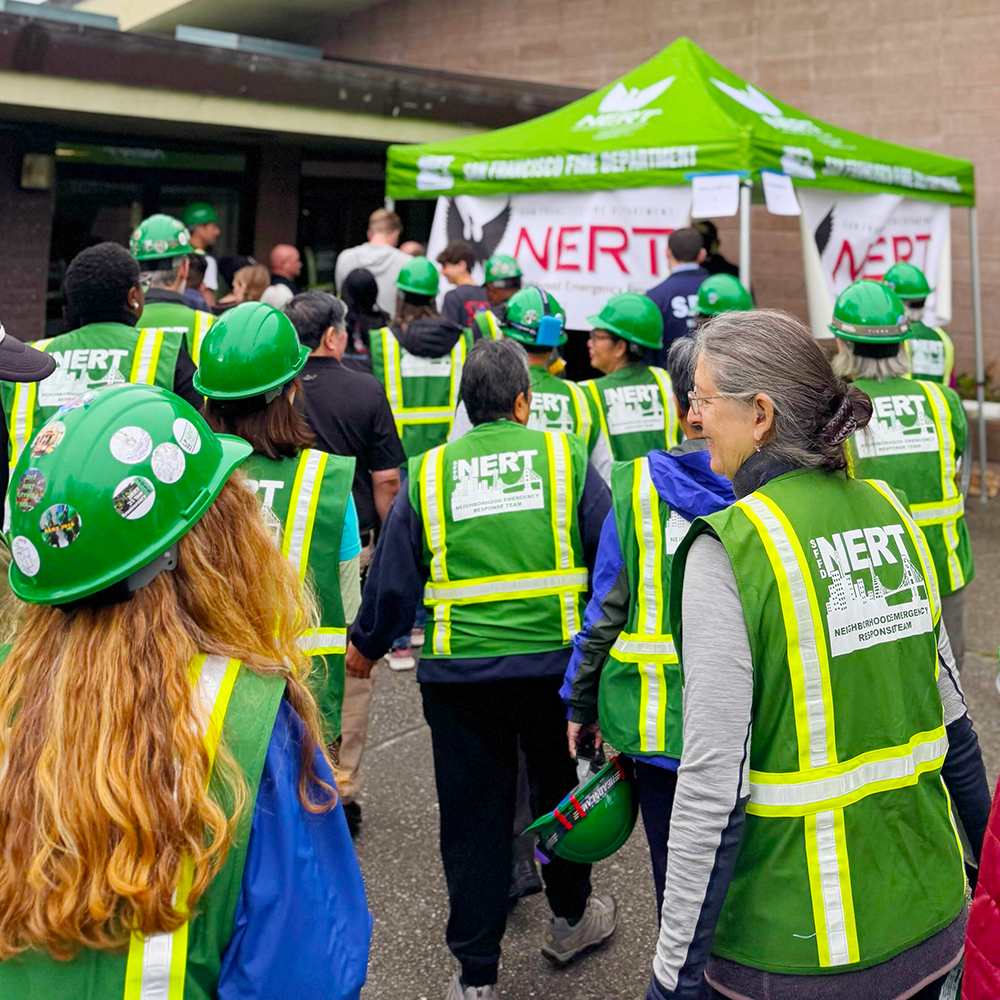
The Disaster Dispatch is excited to roll out a new section: actions NERTs can take in five minutes or less to level up our preparedness. Please join your fellow NERTs and take five minutes to level up your preparedness.
JANUARY
New year, new water! Use the water you currently have stored in your containers to water plants, or for cleaning, then refill the containers with fresh tap water (without any air space). SF Water notes: Tap water can be stored without any treatment. Use food-grade plastic containers, such as clean 2-liter soft drink bottles. Label the containers with the storage date and replace the water every six months. When you drink your stored tap water, you do not have to treat it.
FEBRUARY
As a best practice, NERTs should keep important phone numbers on a small piece of paper in their wallet or purse. This is handy if you lose your phone or if your cell phone runs out of power. This is also a wise thing to do in case of a medical emergency.
MARCH
Inspect your fire extinguishers. Review the gauge and make sure the needle is in the green/good zone. Make sure the extinguisher is accessible, and move any objects which may block access. Inspect the body of the fire extinguisher and look for damage or corrosion. Inspect the hose for any breaks and verify it remains flexible.
We can all spare five minutes each month to double-check our preparedness! Join us.
Let’s Suit Up & Show Our NERT Pride
Let’s represent the brand and look great while doing so!
Training at the SFFD Division of Training is such an exciting privilege! It’s where the pros (SFFD Firefighters) prepare for anything, and when we are there, we should match their energy and professionalism. Just as firefighters wear their uniforms with pride, we should show up as a unified, ready-for-anything team.
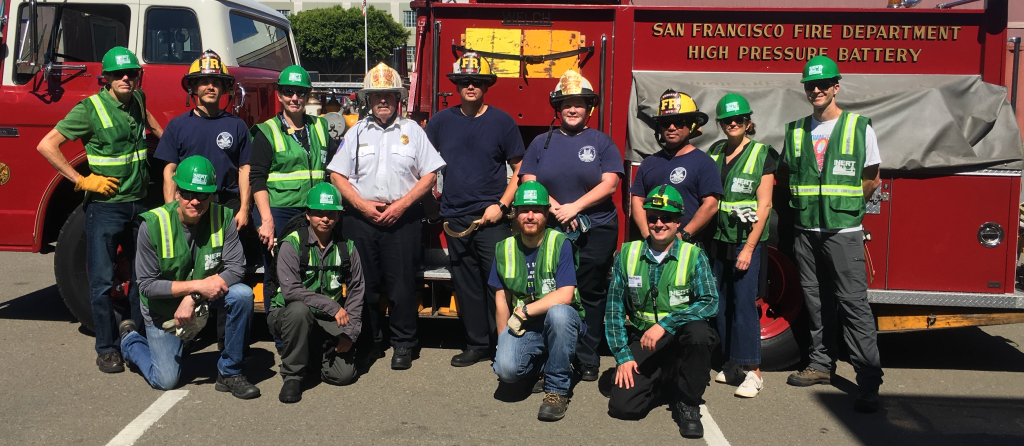
To keep everyone safe and looking sharp, when attending any NERT training, please remember to arrive in your standard NERT gear:
- Your NERT safety vest (Wear it loud and proud!)
- Long pants
- Sturdy, closed-toe shoes (safety toe shoes are even better)
Depending on the fun (and safety-critical) exercise planned for the day, like debris clearing and setting up tents for staging areas, you might also need your helmet and long sleeves. Wearing our vests does more than just keep us safe—it brings us together! It transforms a group of neighbors into a powerful, cohesive team. Plus, us ALL wearing our uniforms, makes for fantastic photos and shows the community we are organized, grateful, and ready to serve The City!

Radio Waves
Turn Your Radio On (and listen to the information in the air)
Spend enough time around NERTs, and you will hear the phrase that we serve as the “eyes and ears” of the SFFD. That isn’t just a slogan—it’s a concise description of how volunteer communications multiply the effectiveness of professional first responders.
What makes that role powerful is not simply seeing something, but being able to share what you have seen, heard, or smelled with the right people, at the right time. A faint odor of gas, a partial building collapse, a blocked access route, or a cluster of lightly injured residents can all shape how resources are deployed. In time-sensitive incidents, accurate field reporting can directly influence outcomes.
That brings us to the value of trained radio operators.
Radio communications—like first aid or size-up—are perishable skills. They degrade without regular practice. Clear message structure, disciplined listening, correct use of procedure words, and calm net behavior under stress do not appear automatically during disasters. They are learned, reinforced, and maintained through repetition.
The same is true for our equipment. Owning a radio is not the same as being ready to use it. Effective operators:
- Keep radios charged, programmed, and tested
- Verify correct frequencies, tones, and channel labels
- Carry spare batteries or power options when possible
- Perform regular radio checks before and during operations
When deployed, the NERT radio operator provides an ad hoc communications infrastructure—one that supports damage assessment, improves situational awareness, and helps prioritize incidents when standard systems are overloaded or unavailable.
Best Practices for Effective EmComm Operations
Strong radio discipline benefits everyone on the net. A few fundamentals make an outsized difference:
- Listen more than you transmit — Monitoring the net prevents duplication, reduces congestion, and helps you understand evolving priorities before keying up.
- Be concise, clear, and factual — Transmit only what you know. Avoid speculation, emotional language, or unnecessary detail.
- Use standard message structure and prowords — This improves accuracy, especially in noisy or stressful conditions.
- Acknowledge and comply with Net Control — Net discipline keeps communications usable when volume increases.
- Think before you key the mic — Ask yourself: Is this information actionable? Who needs it? Right now?
Keep Your Radio With You
A radio left on a table, in a backpack across the room, or turned off to “save battery” cannot do its job.
In disasters—and during routine activations—information moves whether you are listening or not. Keeping your radio on and with you allows you to receive updates, hear emerging issues, and respond immediately when called. Many critical moments are missed not because someone lacked information, but because they were not monitoring when it mattered.
Treat your handheld radio as essential gear—no different than gloves, eye protection, or your ID:
- Carry it on your person when deployed
- Keep it powered on and at a usable volume
- Periodically pause and listen for net traffic
- Stay reachable
Why It Matters
When NERT radio operators are trained, practiced, and equipped, we extend the reach of the SFFD and other responding agencies. We help them see more clearly, make better decisions, and act more effectively.
Ultimately, this is one of the ways we live up to our core principle:
We do the most good, for the most people.
Growing Resiliency
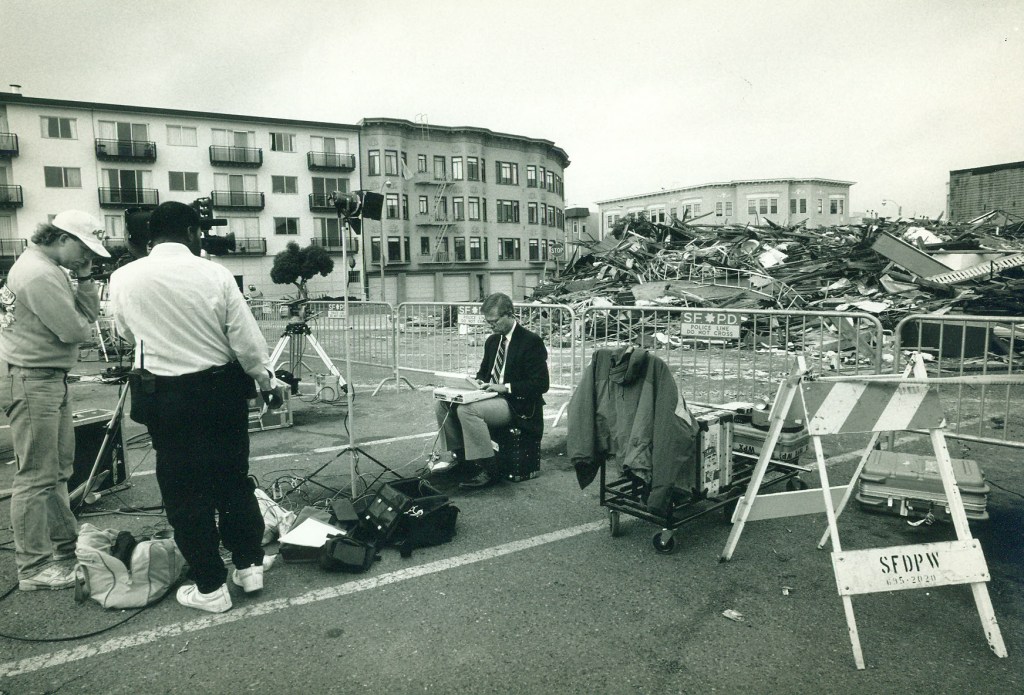
“A journalist works in San Francisco’s Marina District after the October 1989 Loma Prieta Earthquake.jpg” by Nancy Wong is licensed under CC BY-SA 3.0.
Closing the readiness gap with a year of outreach
Contributing author: Anastasia Ashman, Neighborhood Coordinator
Since becoming coordinator for Cow Hollow and the Marina in 2023, I’ve reached out to take the pulse of the local NERT community and learned our longtime and original NERTs are naturally aging out of practice, while a few NERTs are joining the neighborhood roster. We could all use more trained neighbors.
In 2024, I took the Map Your Neighborhood (MYN) class in the Presidio Library with only three people. Instructor Sue Brown said “I’d teach the class for even one person because it matters that much.”
Walking home that day, I realized I might be the only person on my block who knows how to turn off gas, suppress fires, prevent injuries, and check on neighbors. Forget deploying to a staging area, I was going to be busy on my street.
My coordinator priorities for 2025 were set: outreach to create more trained neighbors. I needed to contact all my neighbors and show up as a NERT to reach untrained people, especially newcomers, young people, and families.
Zero to NERT” may be a big leap for people…
Anastasia Ashman
“Zero to NERT” may be a big leap for people, so I focused on the 90-minute class as the most accessible entry point. I attended association meetings to present our local need and MYN’s purpose, and how it connects to NERT. In May, I invited my nearby neighbors and District 2 Supervisor Stephen Sherrill to the class at the Golden Gate Valley Library. In November, I worked with the supervisor to bring a session to the Palace of Fine Arts.
I spent two months leafleting residences, businesses, and visiting gyms, coffee shops, houses of worship. I spoke with people at block parties and bus stops. I notified media outlets and event calendars.
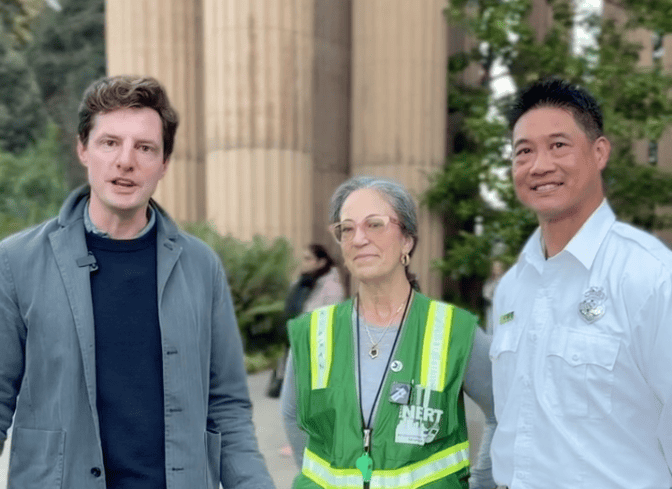
(L to R) District 2 Supervisor Stephen Sherrill; Anastasia Ashman, Neighborhood Coordinator; SFFD Captain Brandon Tom, NERT Program Coordinator, seen in a video published on Instagram, to encourage neighbors to get to know each other through MYN, and to encourage neighbors to take NERT training.
The November class drew more than 400 Eventbrite views with a 10% registration rate. Of those registered, 50% attended, plus a 10% walk-in rate, 25 people total, filling about 20% of the venue, and showing there is still room to grow awareness. Attendees included longstanding neighborhood watch groups and Marina organizers, best known for their Halloween block parties, now planning emergency response. Their presence reinforced that MYN can be especially effective for self-organized blocks.
Instructor Sue Brown led the session, supported by Marina NERT volunteers Paul Tipp and Elisabeth Brandon.
The event already inspired classes being planned in other supervisory districts. I hope this year’s outreach initiative encourages more neighbors to train in 2026.
Editor’s note: While Map Your Neighborhood (MYN) is an excellent tool for community building and introducing neighbors to NERT, it is not a substitute for the full NERT curriculum. Please note that MYN training does not grant access to NERT staging areas.
Telephones in 2026
Making the connection! 📱
The reliability of telecommunications is crucial for personal safety, as power outages can render essential emergency services like 911 unreachable. When the NERT manual was written in 1990, telephones were hardwired into our houses, and Pacific Bell (PacBell) had diesel/gas generators at their Central Offices (C.O.). These generators allowed PacBell to keep the phone lines operational, so for most of us, our hardwired home phones functioned, though the key challenge was overcapacity on long-distance lines as everyone called to check on or update others.
In 2026, for many of us, our phone situation will be very different, with no wired service and only cellular phone service. The California Public Utility Commission requires wireless providers to maintain 72 hours of on-site emergency backup power for cell sites located in Tier Two and Tier Three High Fire Threat Districts (HFTD) to ensure network functionality during Public Safety Power Shutoffs (PSPS). Unfortunately, San Francisco is not a Tier Two or Three HFTD, so most cellular telephone antennas in San Francisco are not required to have backup power. If you explore your neighborhood, you can easily see cellular antenna mounted on light or other utility poles; observe how they are directly wired to electric power and do not have battery back-up nor gas powered generators. (Cell phone antenna on street light pole, Image courtesy AdvanceSIM)
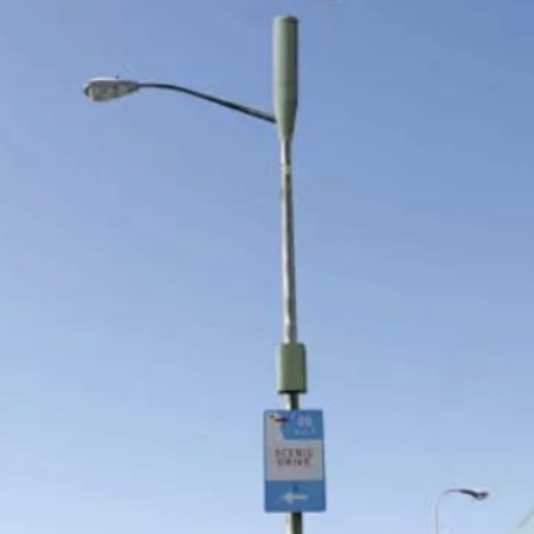
Next time you’re on a walk in your neighborhood, look up and count how many small cell phone antennas you can see!
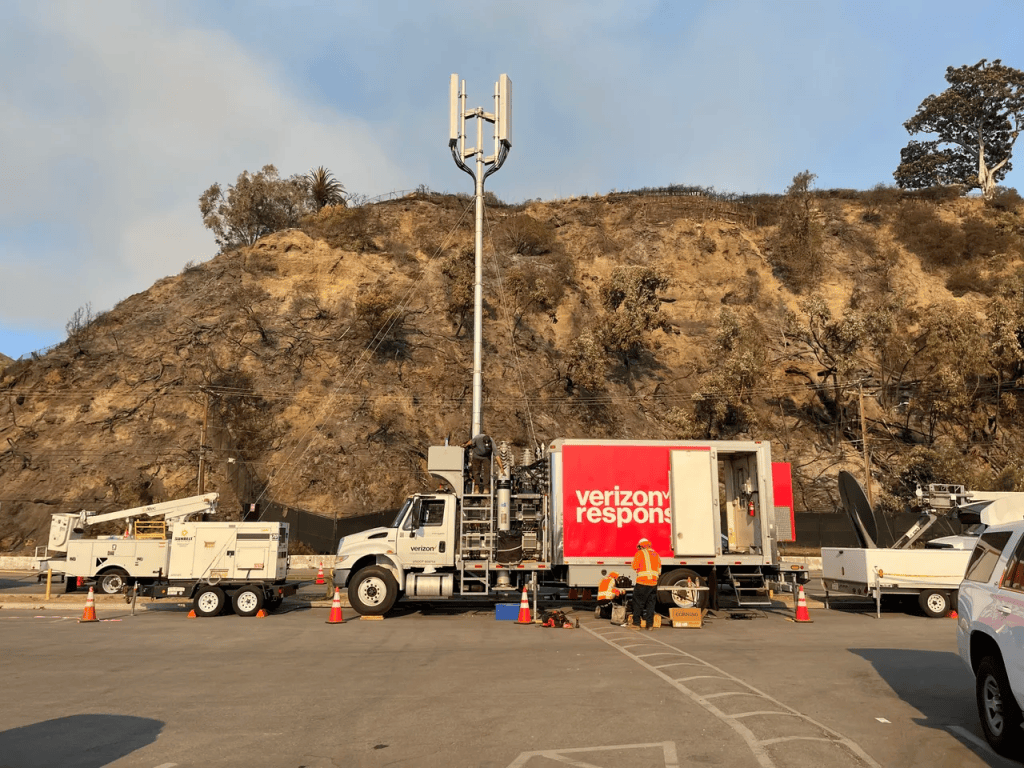
As the legacy wireline telephone provider, some AT&T C.O.’s still have the diesel/gas generators; many of these C.O.’s also host AT&T cellular antennas, providing resilience in case of a power loss, most recently demonstrated during the December 20, 2025, electric power blackout in parts of San Francisco. Other providers, such as Verizon, leverage portable, self-powered cell antennas mounted on a vehicle trailer or semi, commonly referred to as “COWs” (Cells On Wheels), which can be deployed to locations in need. (Cell on wheel image courtesy Verizon.)
In light of these significant changes, it’s important for NERTs to rethink their telecommunications strategy and focus on what they can control going forward.
- Have a backup power source for your cell phone.
- Use SMS/text messages instead of voice to reduce network demand (as proven out through many natural disasters over the last few years).
- Explore your neighborhood and find where you may have better cell phone service or a tower with backup power generators.
- Have important phone numbers written down on a piece of paper.
- If your cell phone service plan and phone support it, activate Wi-Fi calling to make phone calls over Wi-Fi.
- Turn off cellular data for any non-critical apps, turn off push notifications, and turn off automatic e-mail fetch during a disaster to save bandwidth.
- Consider turning your cellphone off when not needed during a disaster to save bandwidth.
What are your disaster telecommunications plans?
Continue the ☎️ conversation on the NERT Slack thread!
EDITORS’ NOTE: NERT and the San Francisco Fire Department do not endorse any specific cellular service provider. References to named organizations are provided for illustrative purposes only.
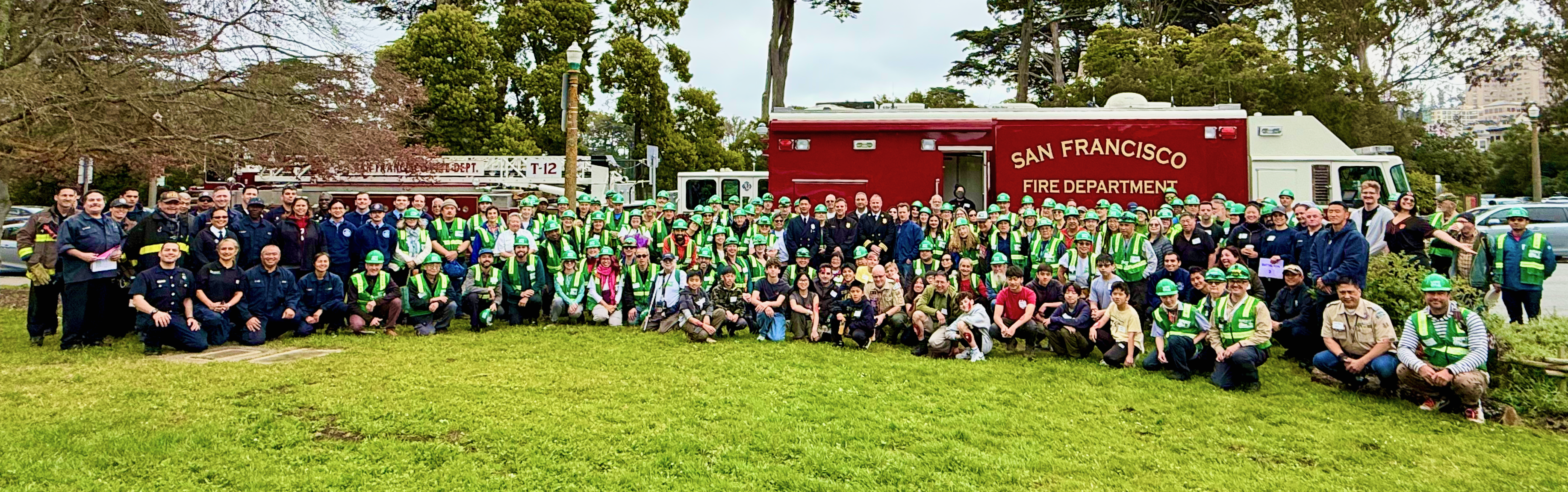
Drill Survey Report Out
Continually improving
The SFFD NERT Program Office is always working to improve the educational experience for NERTs, and a key tool the office uses to measure the effectiveness and engagement different activities provide for team members are After Action Surveys. Here are the results from the Fall Drill:
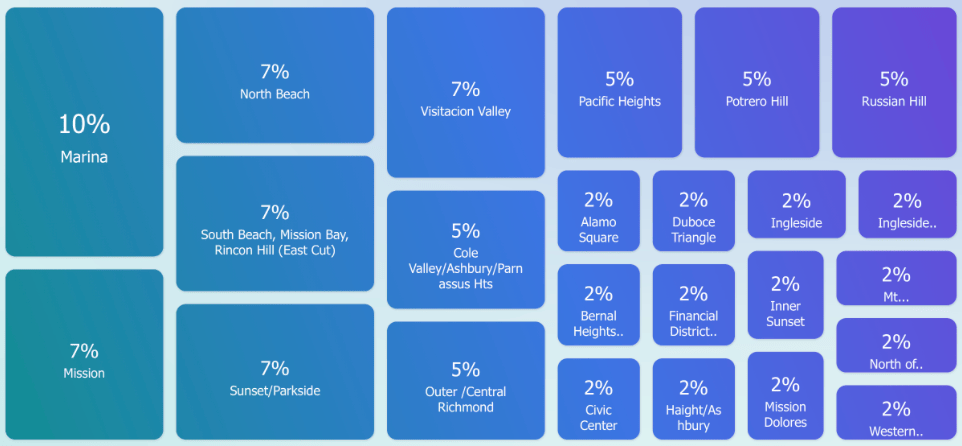
What neighborhoods participated?
Was this your first drill?
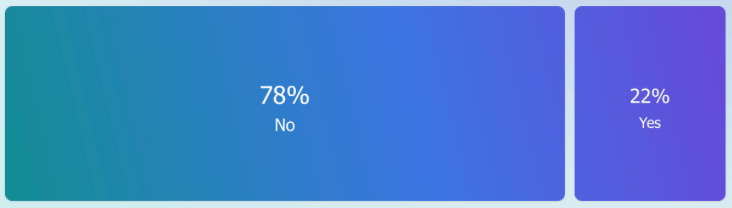
There was a 1% increase in first-time drill participants.
How did you prepare for the drill?
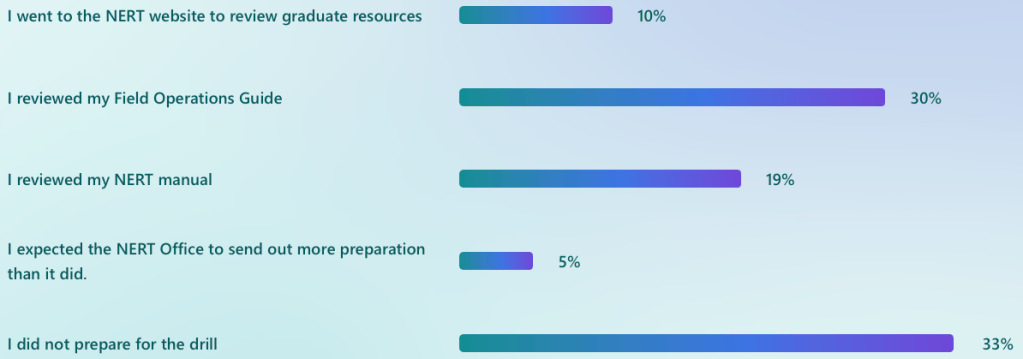
Compared to the spring drill, 3% fewer reviewed their FOG, while there was a 6% increase in participants reviewing the full NERT manual.
Exercise ratings
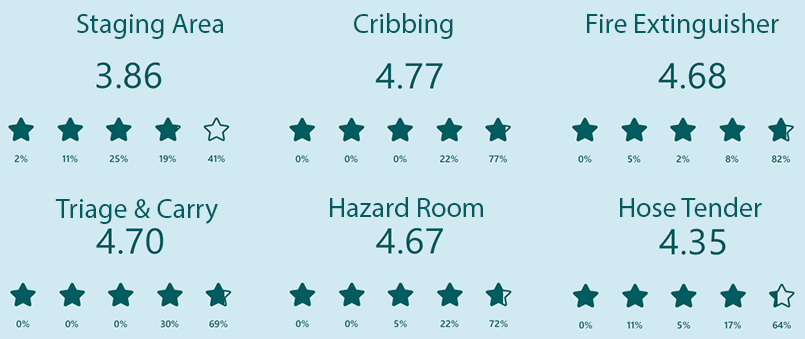
NERTs increased their rating on the Triage, and the staging area exercise!
Agree or disagree
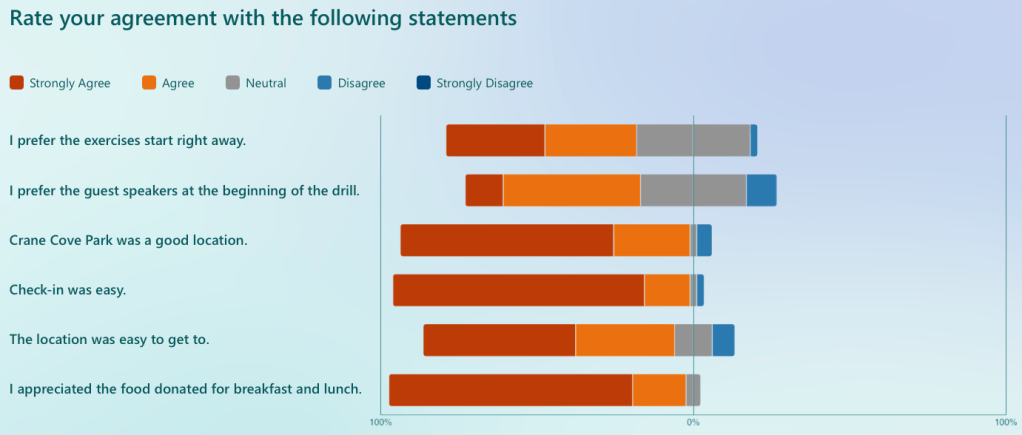
NERTs continue to flex their opinions with some small changes from last spring about how the drill should start. NERTs were more enthusiastic about Crane Cove Park than the County Fair Building.
What are NERTs saying?
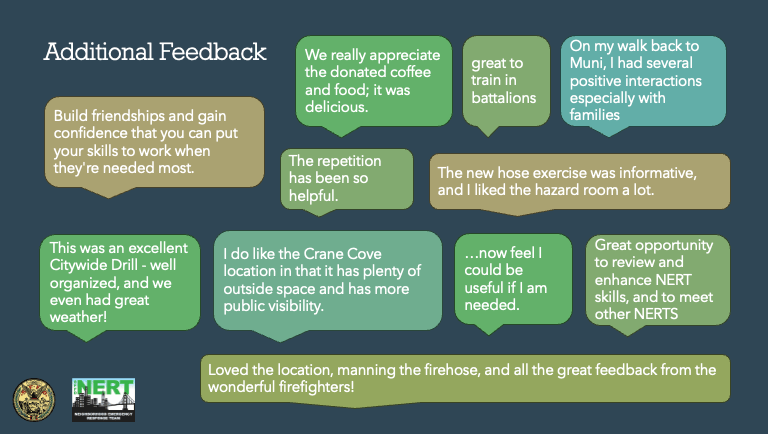
Key points
- Over 100 NERTs participates
- The community performed over 300 hours of community engagement
- We continue to see a desire and need to educate on the operation of a staging
When you have an opportunity to complete a survey after a meeting or training exercise, please do! This feedback helps the program deliver engaging content.
NERT Quarterly Calendar
We’ve added FEMA self-study classes to this set of calendars. We’ve done so because many organizations, such as NERT, the Auxiliary Communication Service, hospitals, and the IT Disaster Response Team, require their members and employees to take these classes. Grow your skills and become a better-prepared NERT.
As more events are published throughout the quarter, we’ll update this to inform you of those events.
(Trouble accessing the registration system, please contact the NERT office at sffdnert at sfgov.org )
JANUARY
All-month self-study: FEMA – Introduction to Community Emergency Response Team IS-317 ‡
7: Cole Valley, Haight-Ashbury, NOPA neighborhood meeting, 6:30 PM at Paige St. Library. Open to all current NERTs
7: ‼️📣 NERT Full Training Click HERE to learn more (WED full day, 9 AM) Sherry Williams Community Center, 850 Ave I (Treasure Island), Tell your friends and neighbors! 📣 Register now via NERT APP
8: ‼️📣 NERT Full Training Click HERE to learn more (TUE evenings, 6 PM) St. Aidan’s Church – 101 Gold Mine Drive, Tell your friends and neighbors! 📣 Register now via NERT APP
10: 2 Meter Critical Mass Radio Practice*
17: NERT DAY@DOT – HAM CRAM – Earn your amatuer radio lisence in one day. Limited openings, register at the class providers website. Register on BAEARS Website
28: ‼️📣 NERT Full Training Click HERE to learn more (WED evenings, 5:30 PM) SFFD Division of Training, 2310 Folsom St, Tell your friends and neighbors! 📣 Register now via NERT APP
FEBRUARY
All-month self-study: FEMA – An Introduction to the National Incident Management System IS-700 ‡
4: Cole Valley, Haight-Ashbury, NOPA neighborhood meeting, 6:30 PM at Paige St. Library. Open to all current NERTs
25: ‼️ NERT Recertification @ (WED evenings, 5:30 PM) SFFD Division of Training, 2310 Folsom St – Register now via NERT APP
14: 2 Meter Critical Mass Radio Practice*
21: NERT DAY@DOT –
A) Neurodiversity Awareness – Register now via NERT APP;
B) 2MCM & NERT collab, for ham radio operators (only). Signup coming soon.
MARCH
All-month self-study: FEMA – Basic Incident Command System for Initial Response ICS-200 ‡
4: Cole Valley, Haight-Ashbury, NOPA neighborhood meeting, 6:30 PM at Paige St. Library. Open to all current NERTs
14: 2 Meter Critical Mass Radio Practice*
21: NERT DAY@DOT
A) Class to be determined – Register later in the NERT app.
B) Fun With Forms 2026, a new and improved curriculum. Signup coming soon.
APRIL
All-month self-study: FEMA – National Response Framework, An Introduction ICS-800 ‡
1: Cole Valley, Haight-Ashbury, NOPA neighborhood meeting, 6:30 PM at Paige St. Library. Open to all current NERTs
11: 2 Meter Critical Mass Radio Practice*
18: NERT DAY@DOT – Spring Drill
Are you a neighborhood coordinator who would like to list your meetings here? Please send details to sffdnertnewsletter AT gmail.com and we will list them here.
‡ This class is not instructed by NERT; rather, it is an online-only curriculum provided by FEMA. Upon completing the class, you will receive a digital certificate of completion from FEMA.
* Please note that some events are unaffiliated with the NERT Program. The NERT program is not responsible for its content.
Let us know how we’re doing.
Please complete this survey about the Disaster Dispatch!
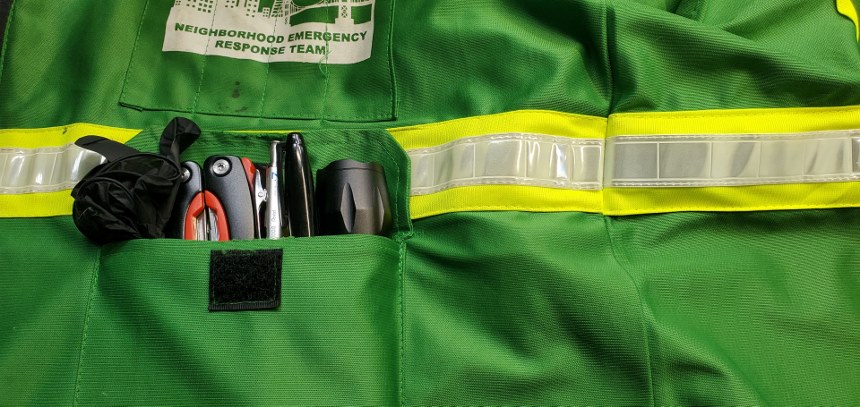
Vest Fodder
MyShake
If you have not yet, please install the MyShake app on your smartphone to help get timely earthquake early warnings.
Apple/iOS: https://apps.apple.com/us/app/myshake/id1467058529
Android: https://play.google.com/store/apps/details?id=edu.berkeley.bsl.myshake
NERT Slack Channel
Besides our newsletter, the NERT Slack Channel is another way to stay in touch. While not a replacement for Regroup, it does offer messaging and communications for NERT members. To subscribe on Slack, drop an email to: sffdnertnewsletter at gmail.com, and we’ll send you a link. Please use a real name, no nicknames or handles.
Have a Story Idea?
Let Us Know!
If you have an idea for an article or story for our newsletter, please pass it on to sffdnertnewsletter AT gmail.com.
We welcome your ideas and want this to be an inclusive and encompassing newsletter.
The Disaster Dispatch is published quarterly in January, April, July, and October.
Credits
AI has assisted in various parts of story creation and editing.
AI-generated images by Adobe Firefly, other images are cited inline.
Trouble Viewing This?
Certain browsers may not render this page correctly. Try opening the document in a different browser.
The Disaster Dispatch is a publication of the SFFD NERT Program. All Rights Reserved.

