With the chill of summer in the air, enjoy this issue of the Disaster Dispatch! As you enjoy summer wherever it takes you, be sure to remember to pack with safety and resilience in mind.
In this issue:
- Spring drill review
- NEW: the NERT Community Excellence Award
- Radio Corner: Net Control
- Training Review: Ladders
- NERT Quarterly Calendar
- Vest Fodder
Published on July, 2025.
Comments? Drop us a line anytime: sffdnertnewsletter at gmail.com
Drill Complete!
Spring 2025 NERT Citywide Drill: A Big Win for San Francisco!
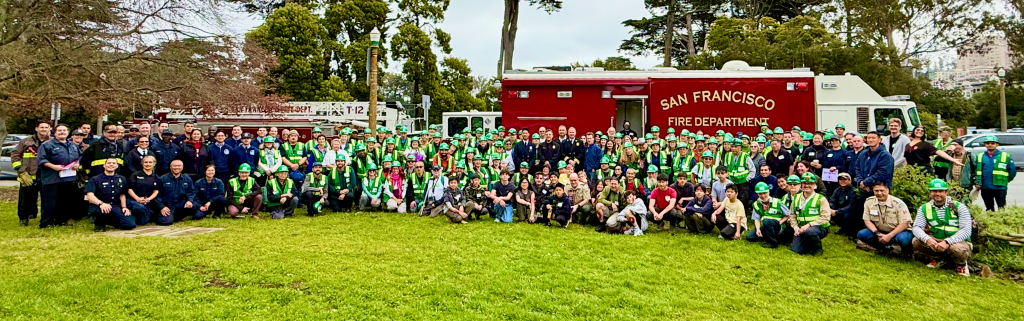
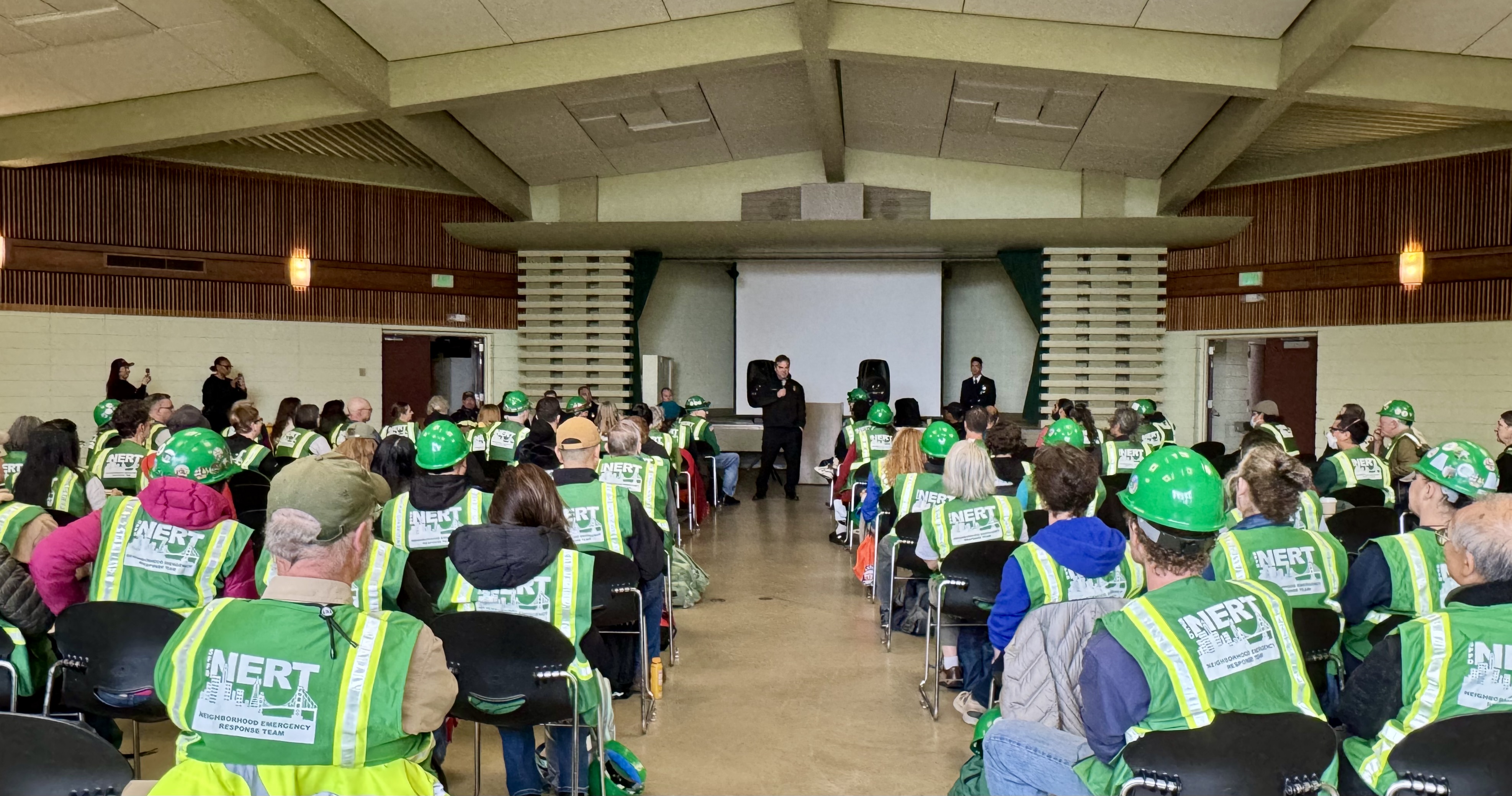
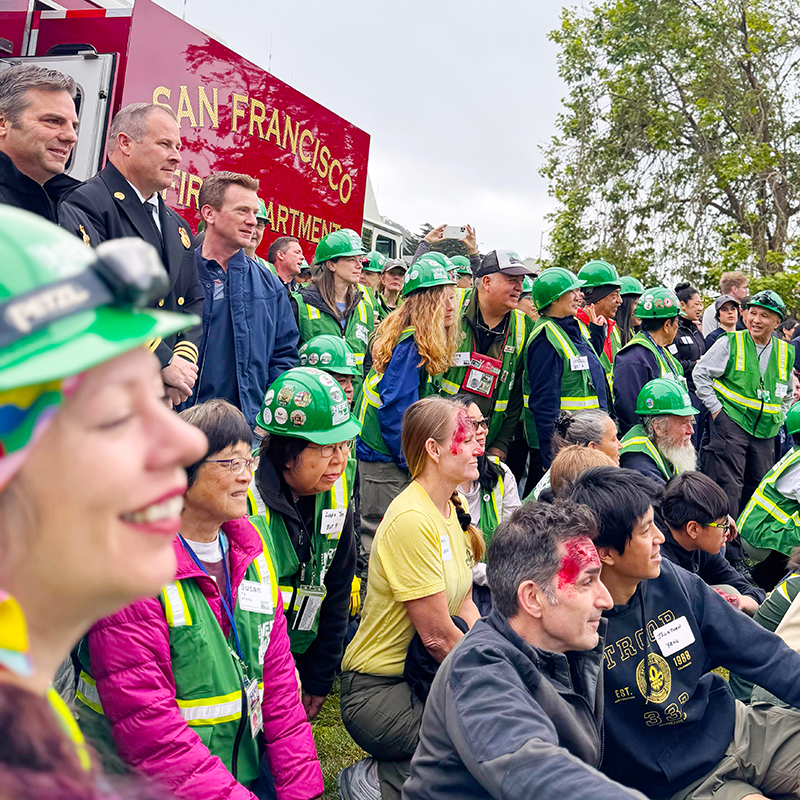
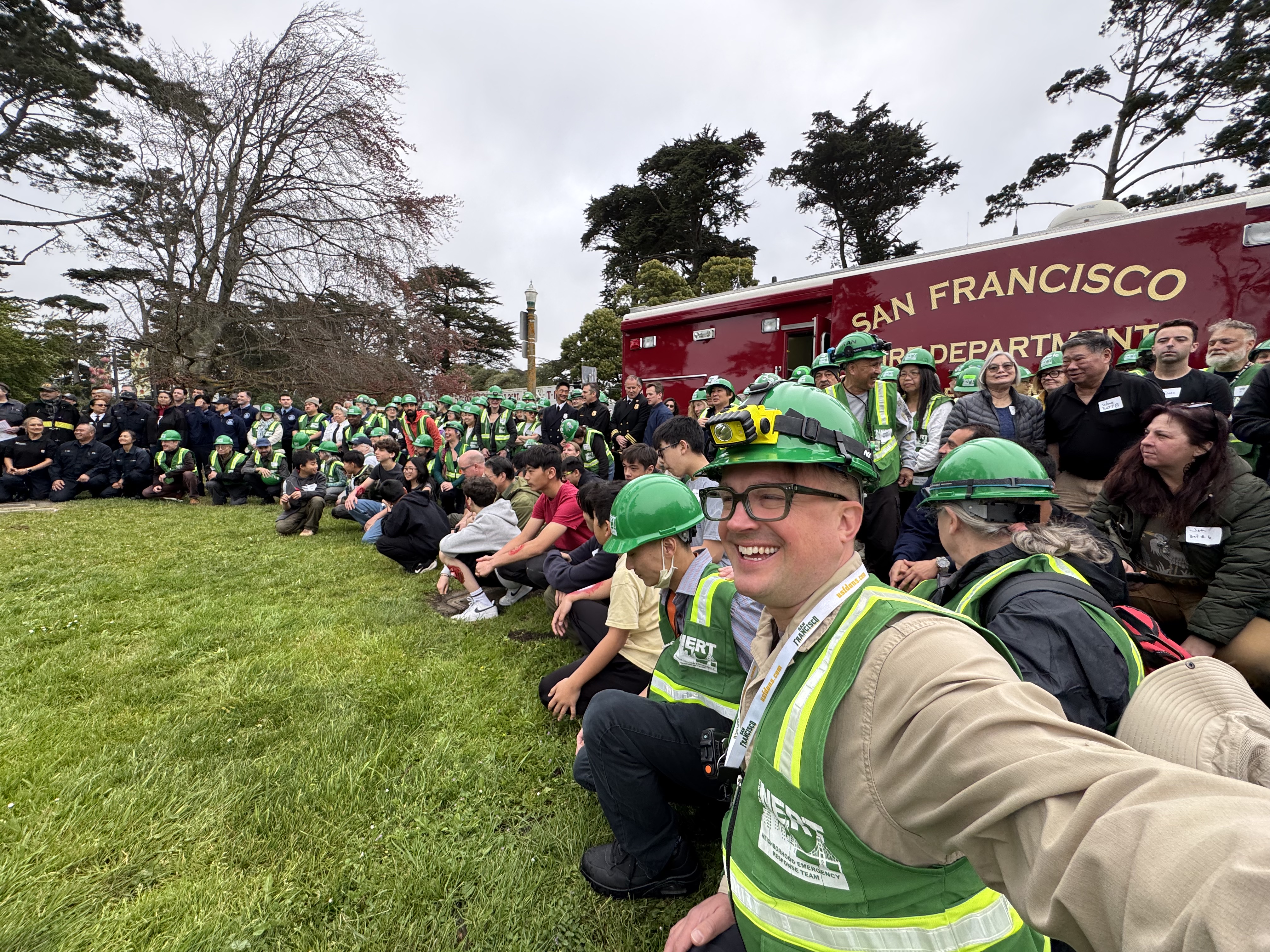
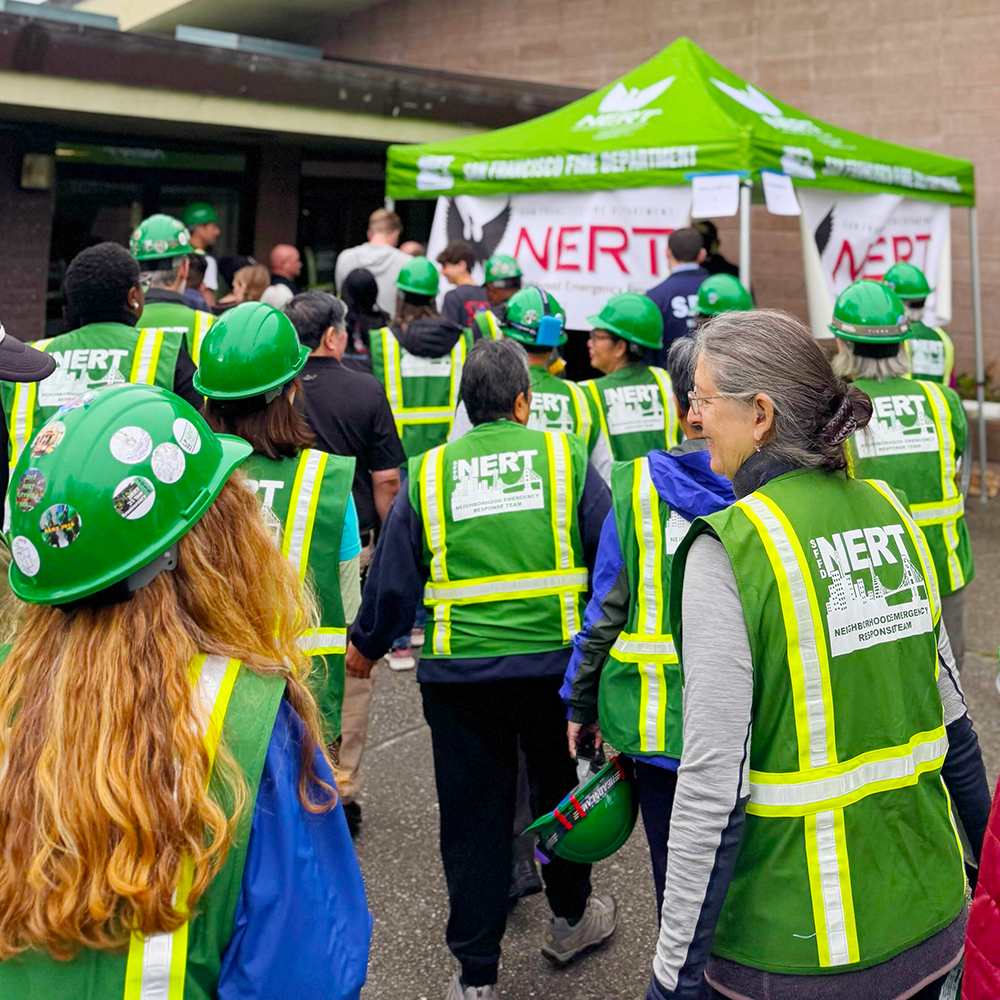
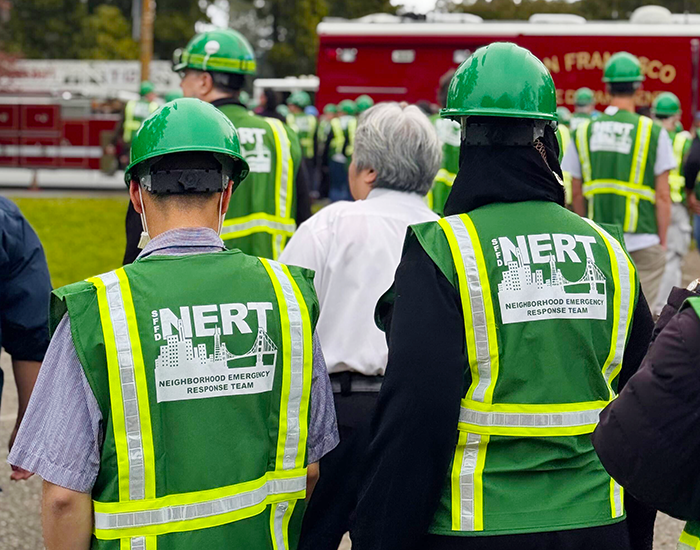
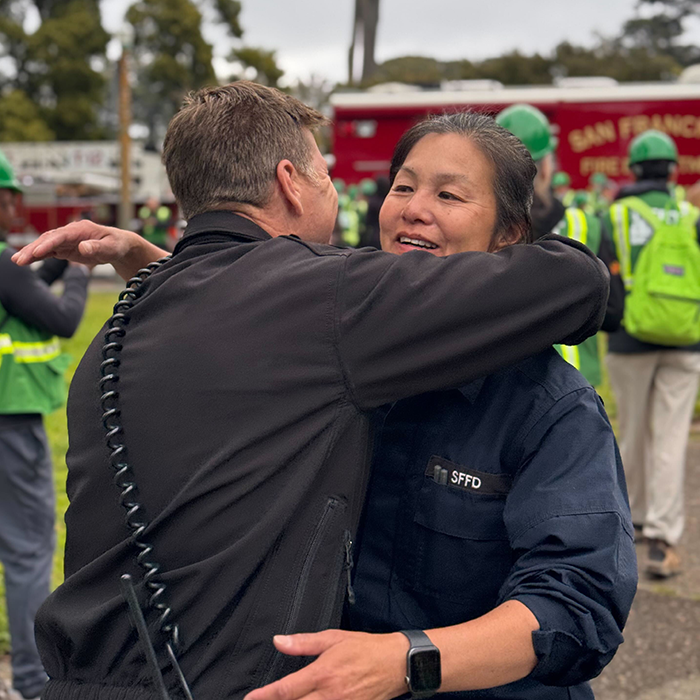
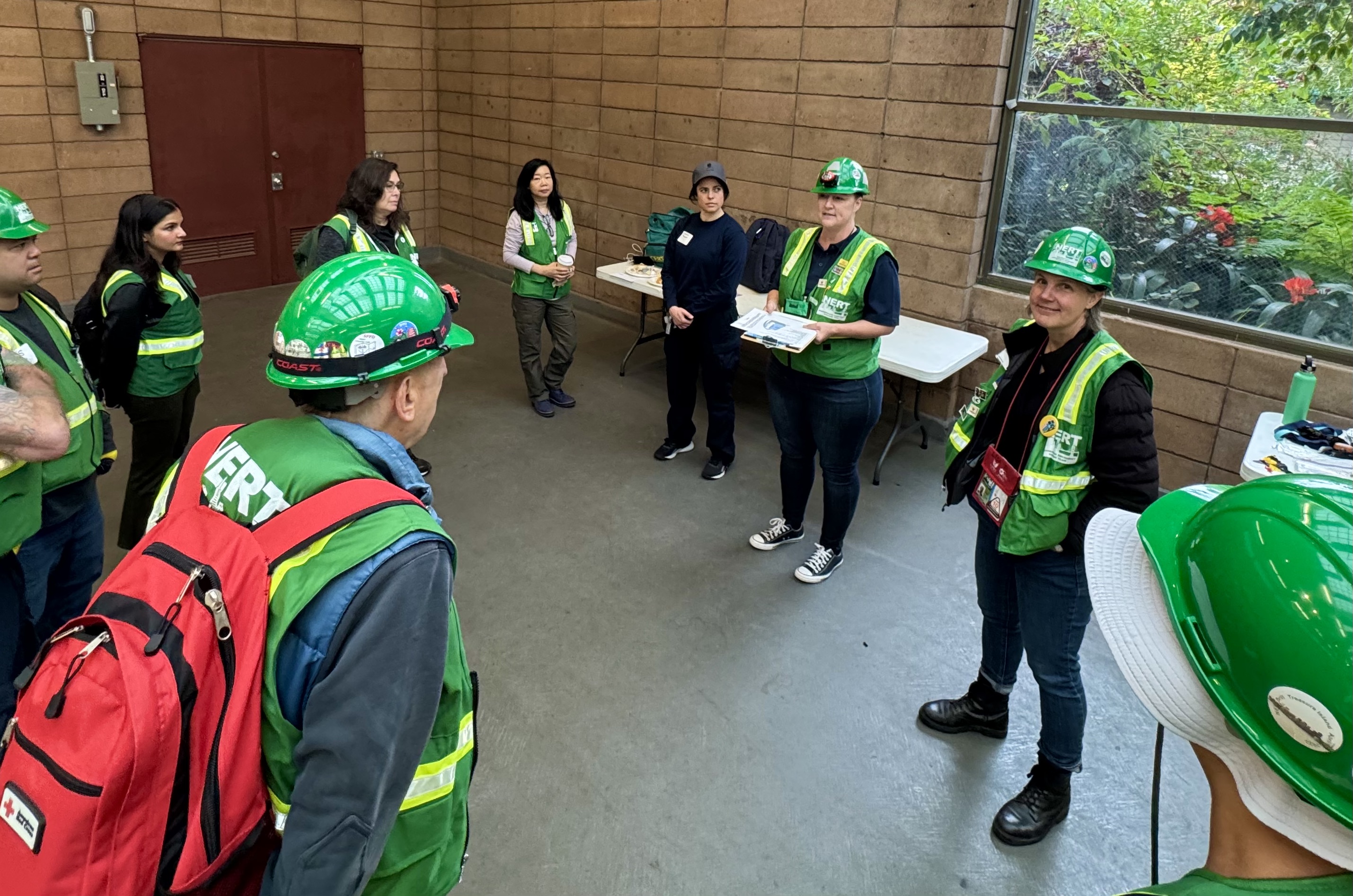
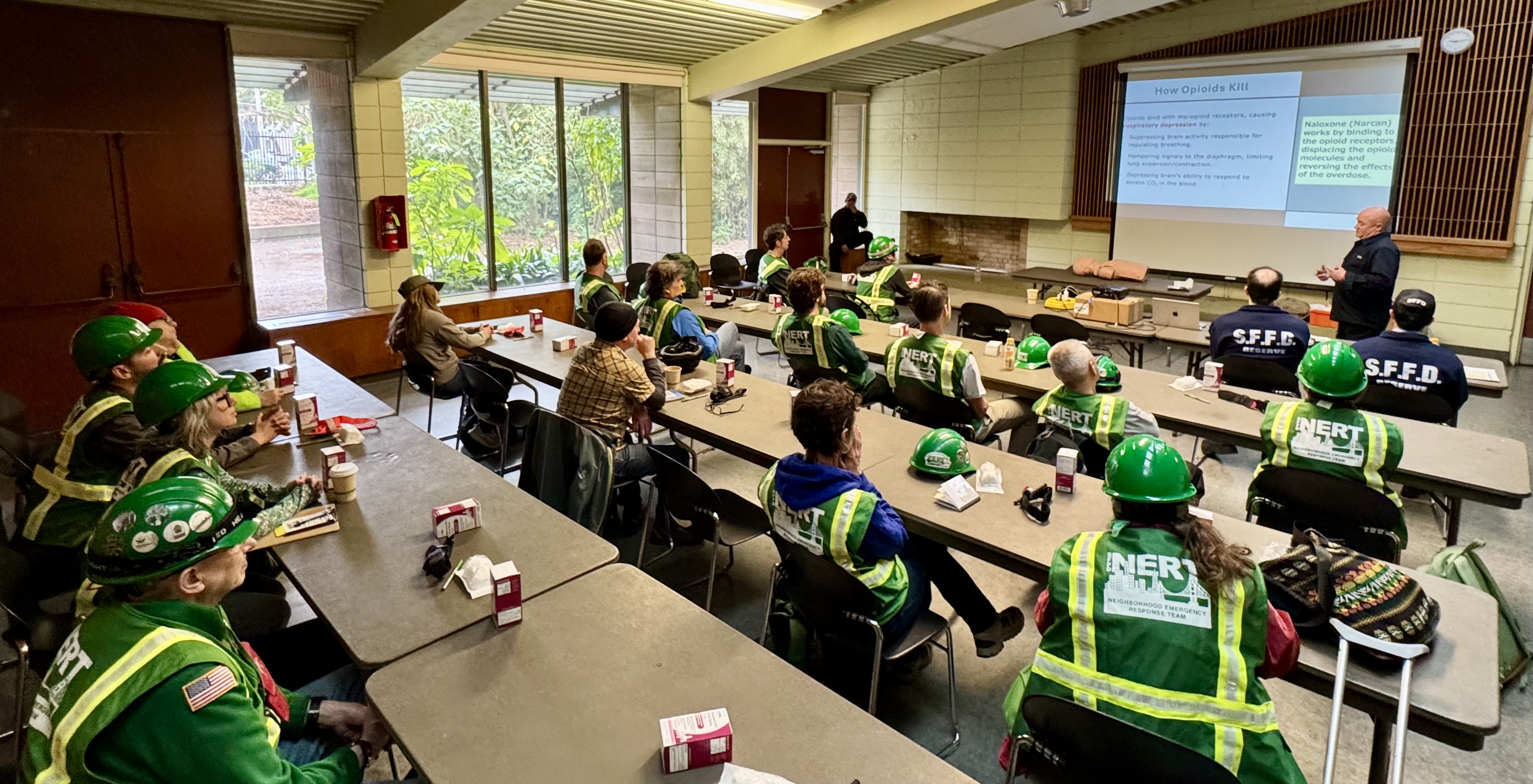
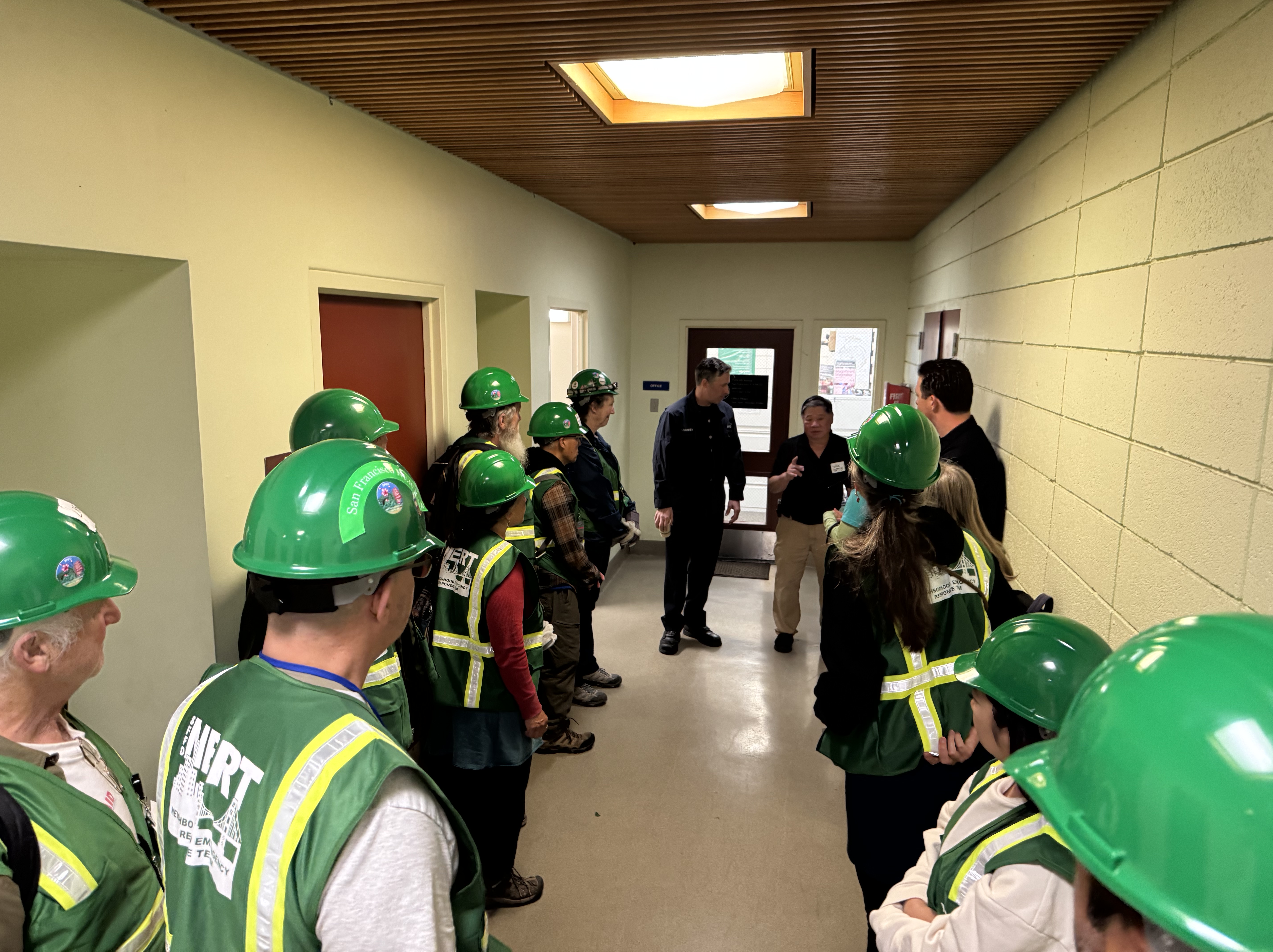
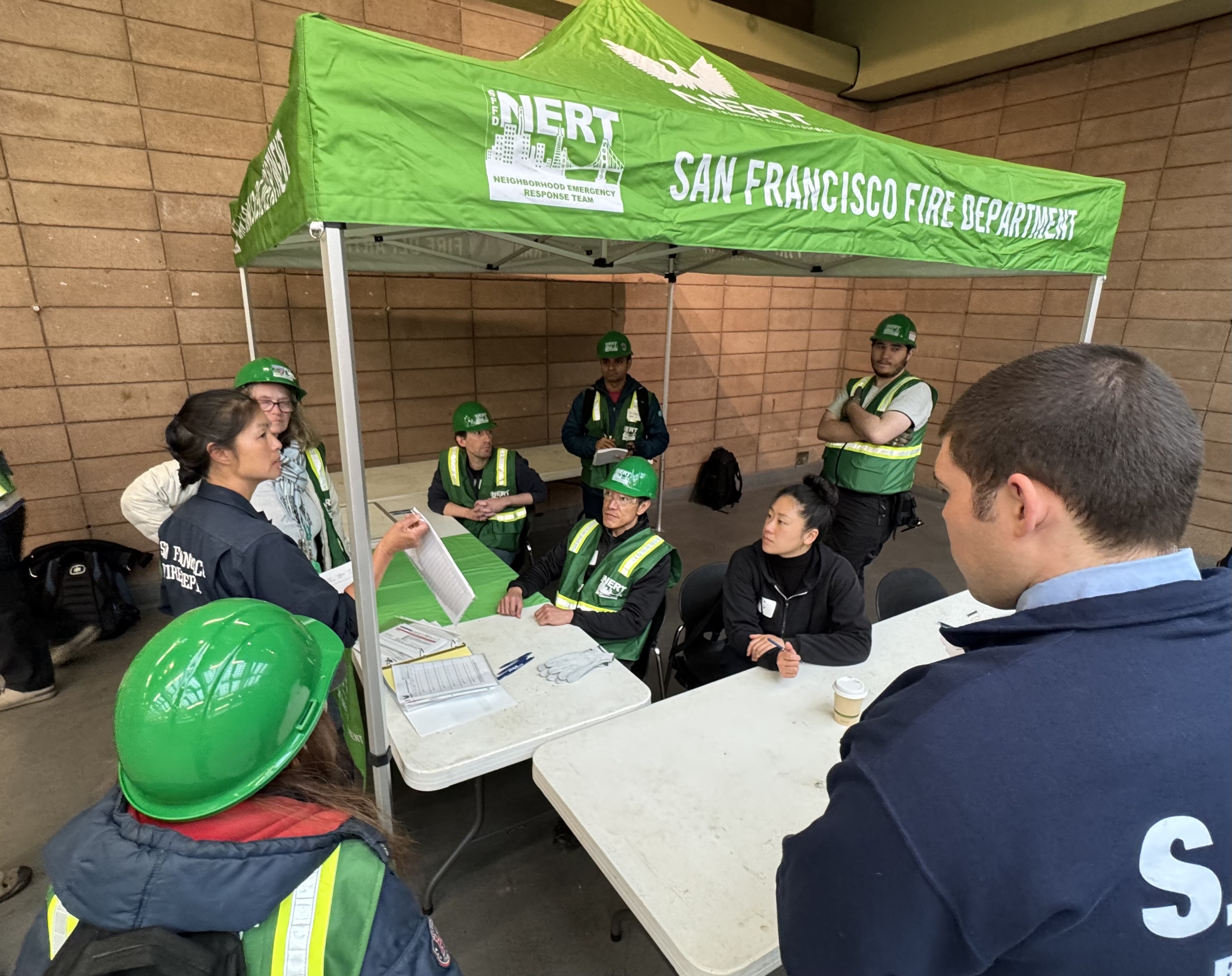
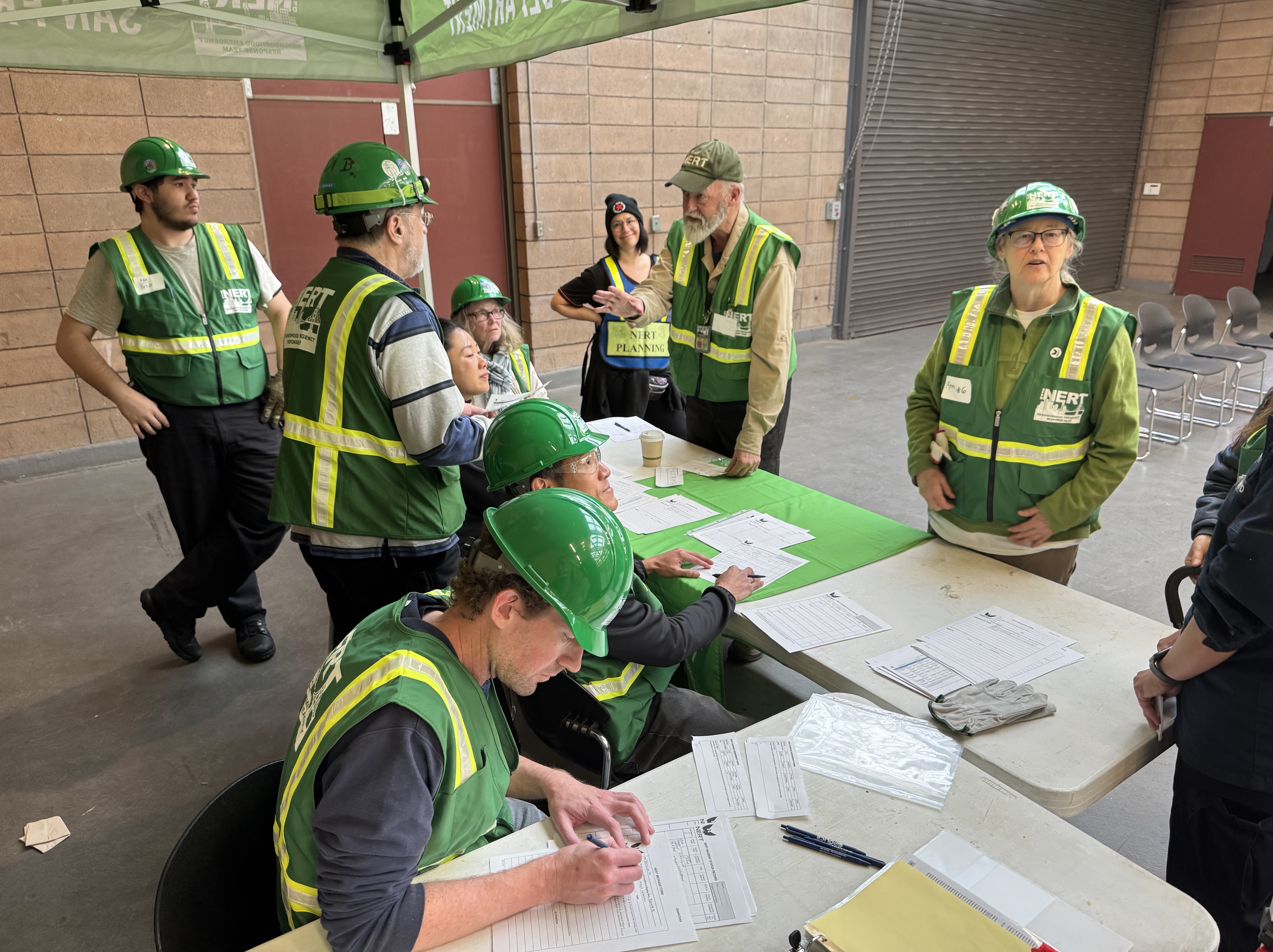
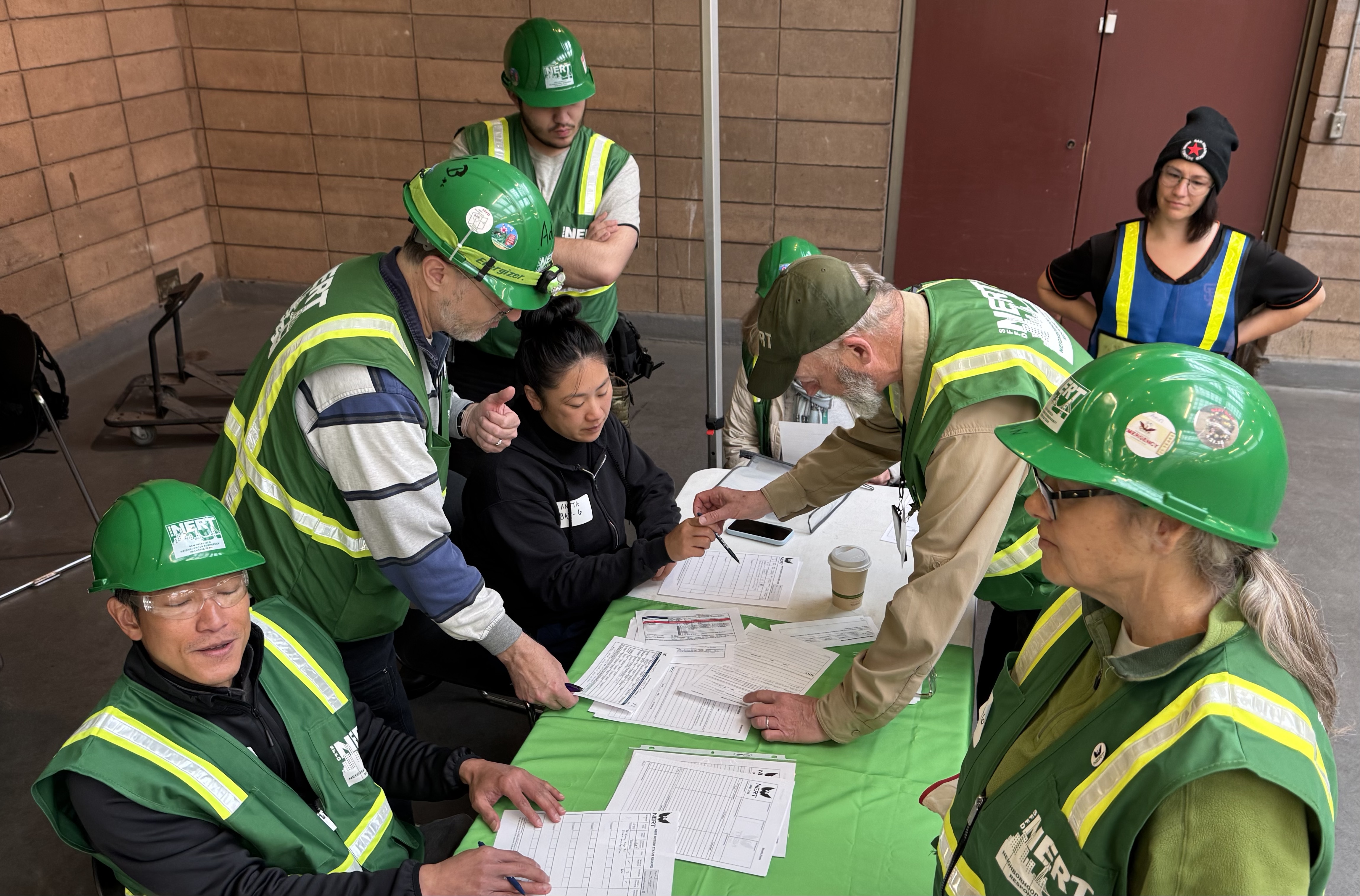
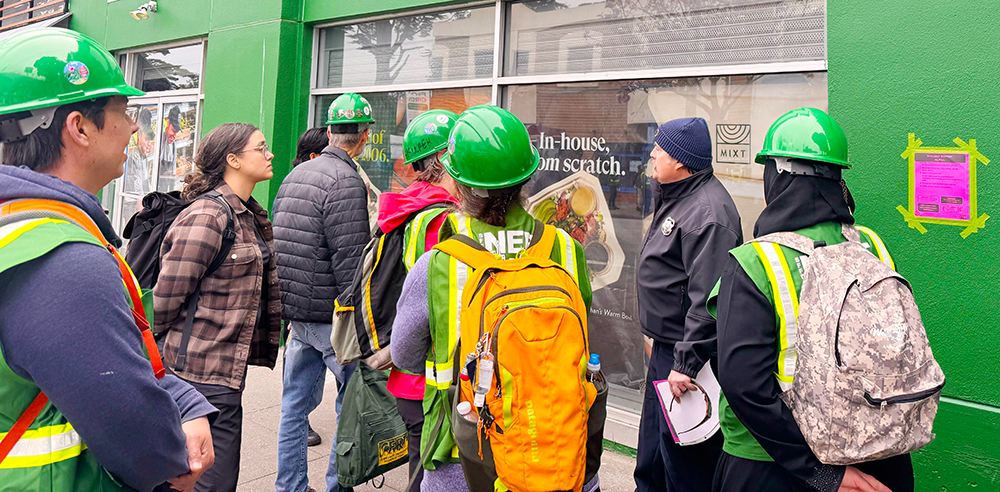
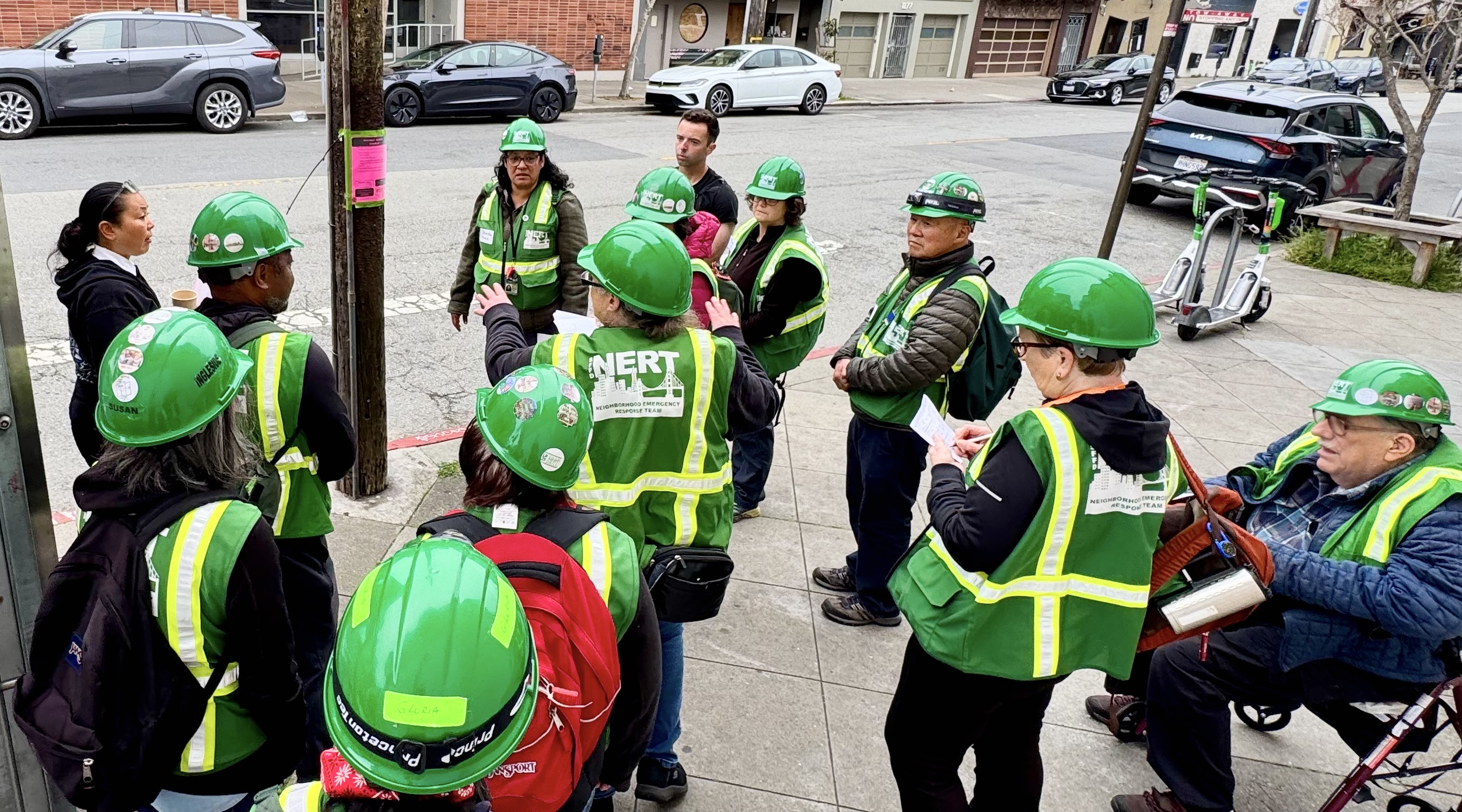
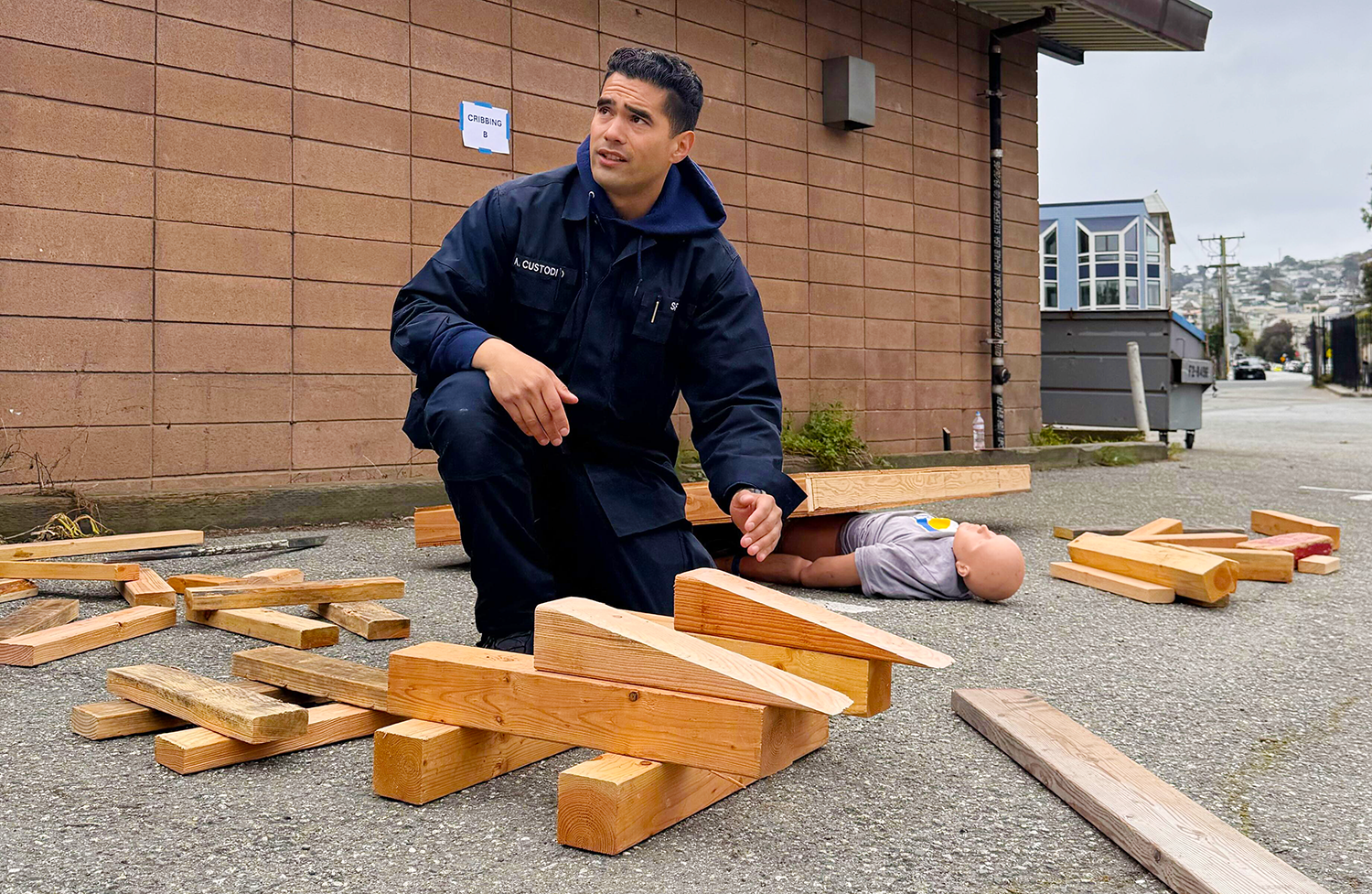
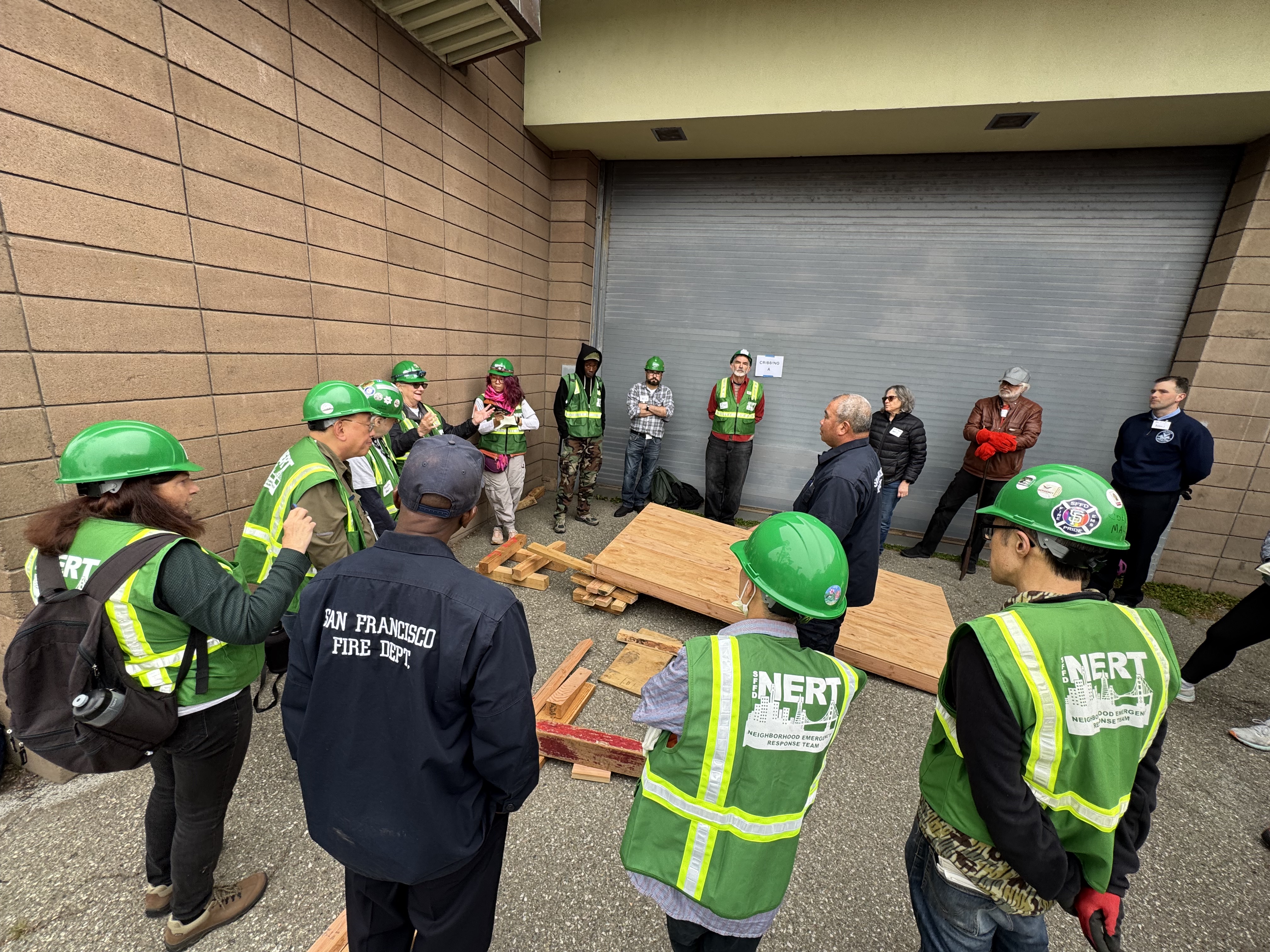
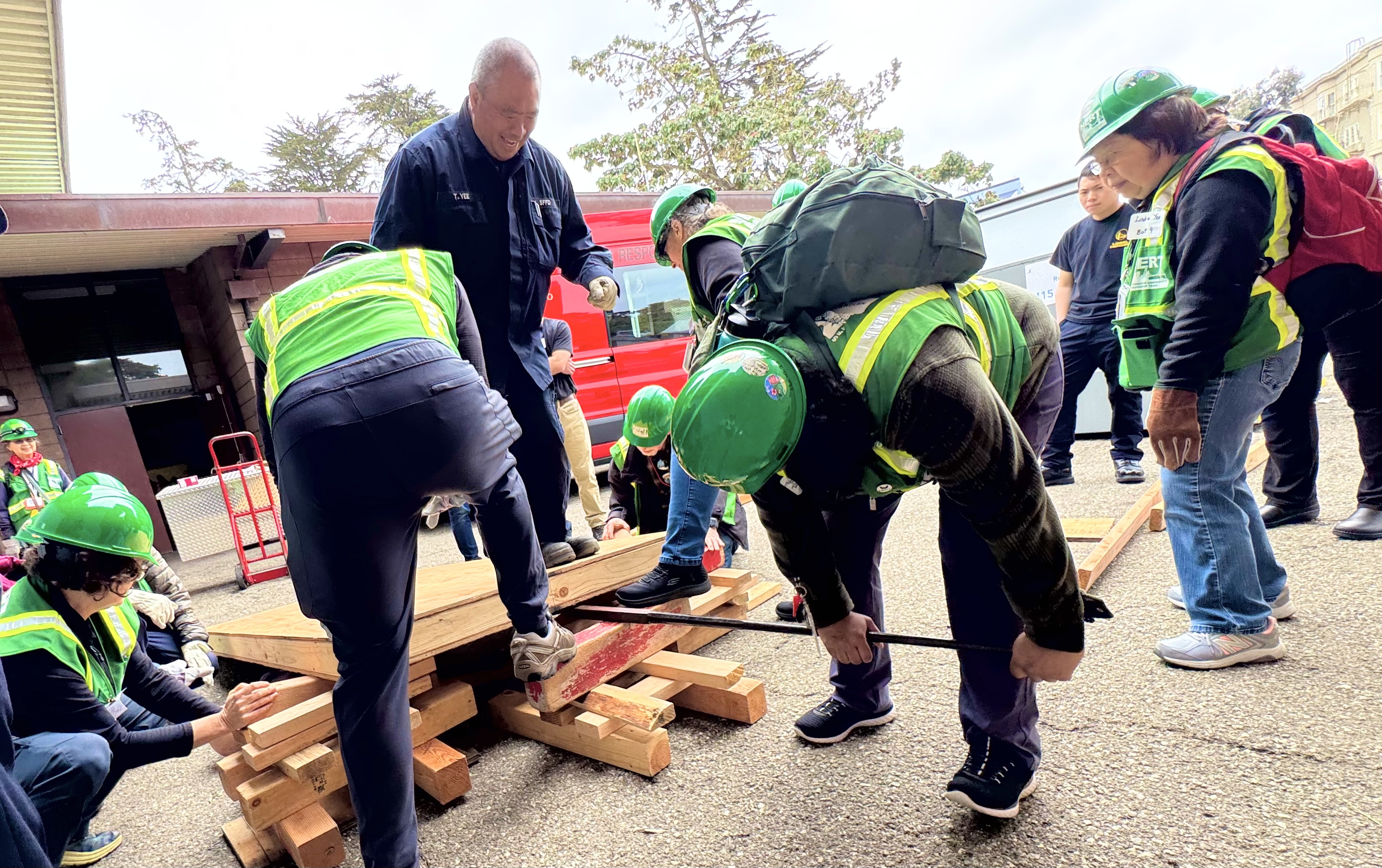
This spring, San Francisco Neighborhood Emergency Response team members showed just how strong and prepared our community can be! The SFFD NERT Spring 2025 Citywide Drill brought together over 120 Neighborhood Emergency Response Team (NERT) volunteers from across the city—and the results were amazing!
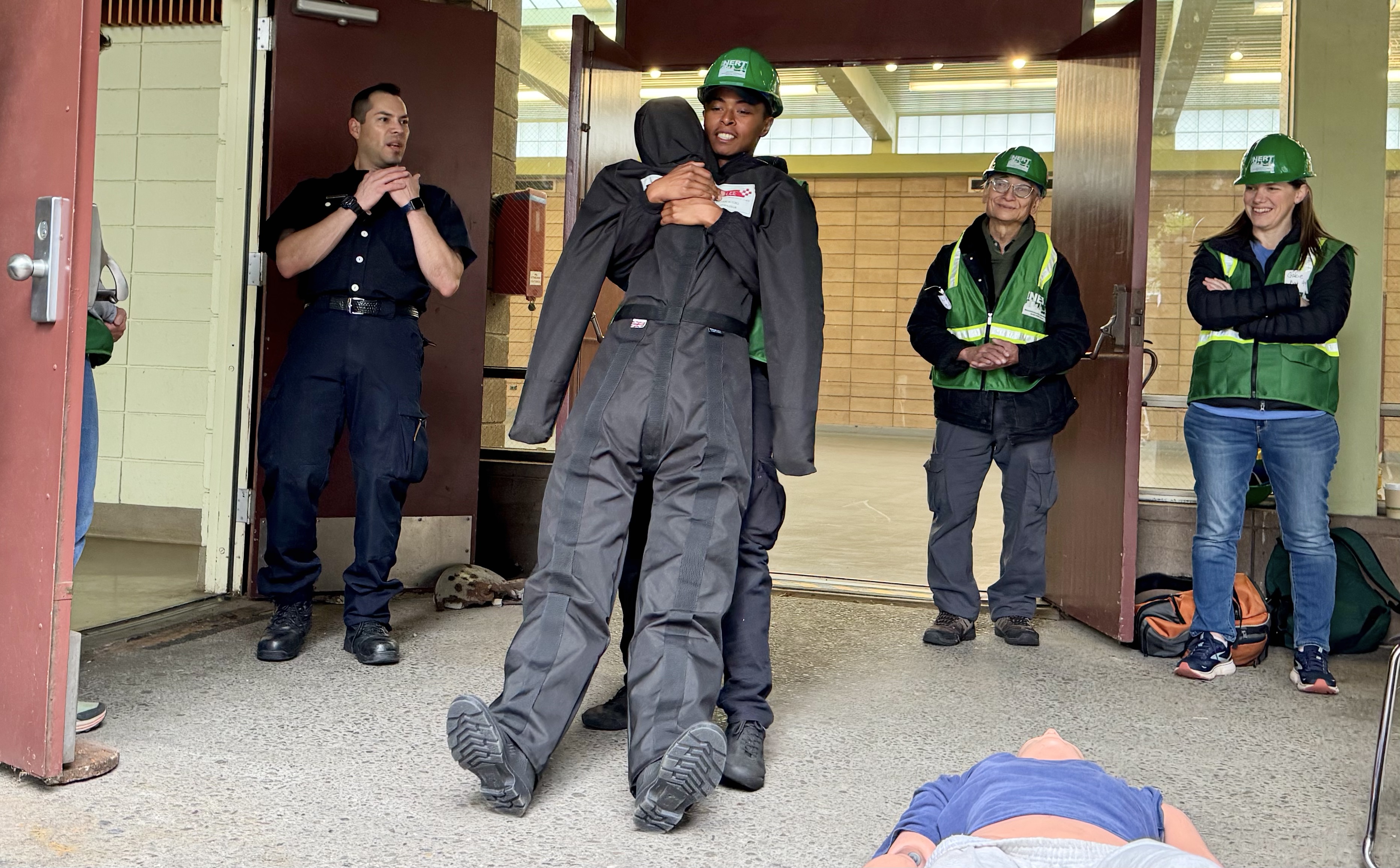
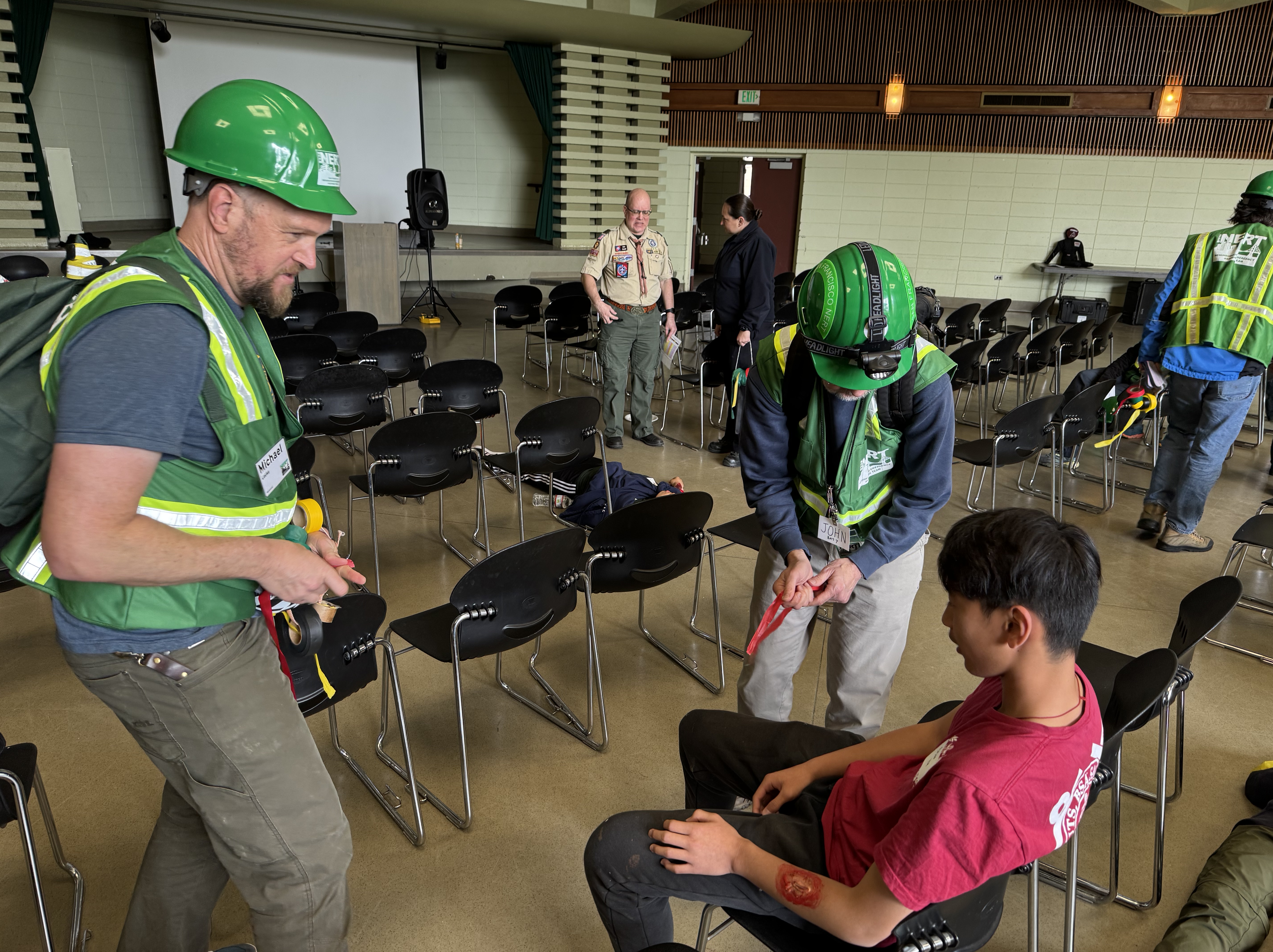
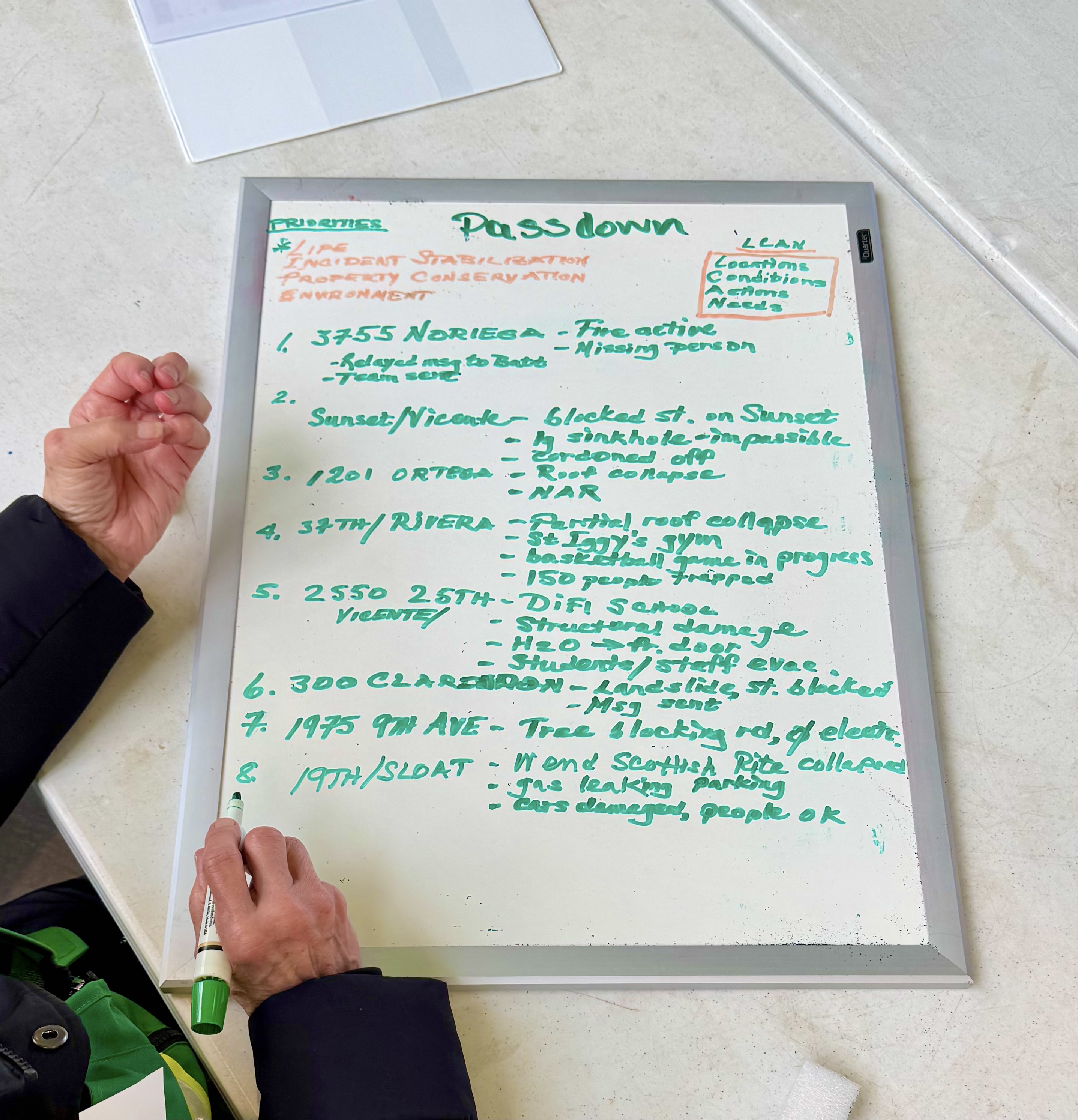
Held at the SF County Fair Building, this spring drill was one of the most exciting and realistic yet. Under the guidance of San Francisco Firefighters and Medics, NERTs practiced responding to emergencies such as earthquakes, fires, and building collapses. The goal? To make sure that when disaster strikes, our neighborhoods are ready!
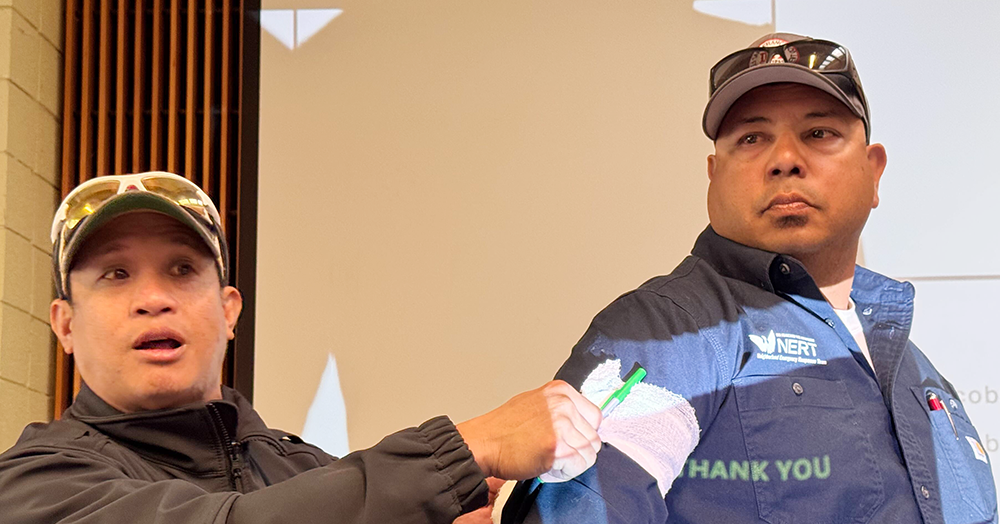
Volunteers took part in hands-on activities like search and rescue, first aid, radio communication, utility control and more. These are the same skills that can save lives in a real emergency. The drill was designed to feel as real as possible, and many participants said it gave them a huge confidence boost.
According to the After-Action Survey, the feedback was overwhelmingly positive. More than 90% of volunteers rated the drill as “excellent” or “very good.” Many said they felt more prepared than ever before.
“This was the best drill I’ve ever attended. It felt real, and I learned so much. I know I can help my neighbors if something happens.”
–Drill Participant
The drill also helped build stronger connections between volunteers from different neighborhoods. People worked together, shared ideas, and supported each other. That teamwork is what NERT is all about—neighbors helping neighbors.
“Working alongside SFFD gave me a whole new level of confidence. I feel like part of a real emergency response team now.”
–Drill Participant
The SFFD Program Coordinator, Captain Brandon Tom, did an outstanding job organizing the event. He and his team’s hard work made everything run smoothly and safely. A big thank-you goes out to them, and to every volunteer who showed up ready to learn and serve.
This drill wasn’t just a training—it was a celebration of community strength. It reminded us that we all have a role to play in keeping San Francisco safe. Whether you’re a longtime NERT member or just getting started, your efforts matter.
Let’s keep the momentum going! If you haven’t joined NERT yet, now is a great time to sign up. You’ll learn valuable skills, meet great people, and become a key part of your neighborhood’s emergency plan.
Together, we’re building a safer, stronger San Francisco—one drill at a time.
Save the date for the Fall 2025 Citywide Drill: Saturday, October 18th, 2025!
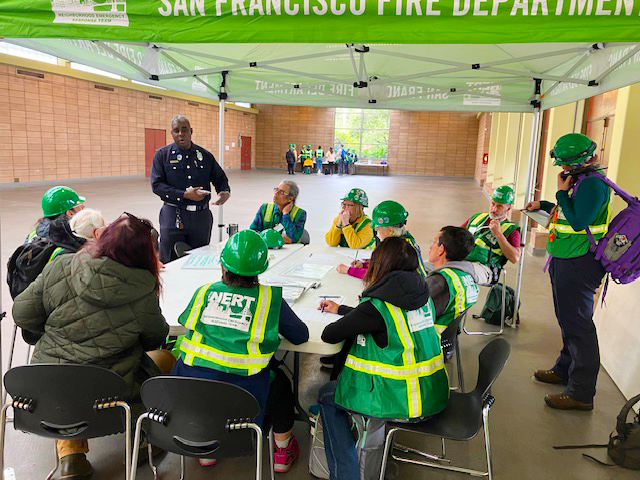
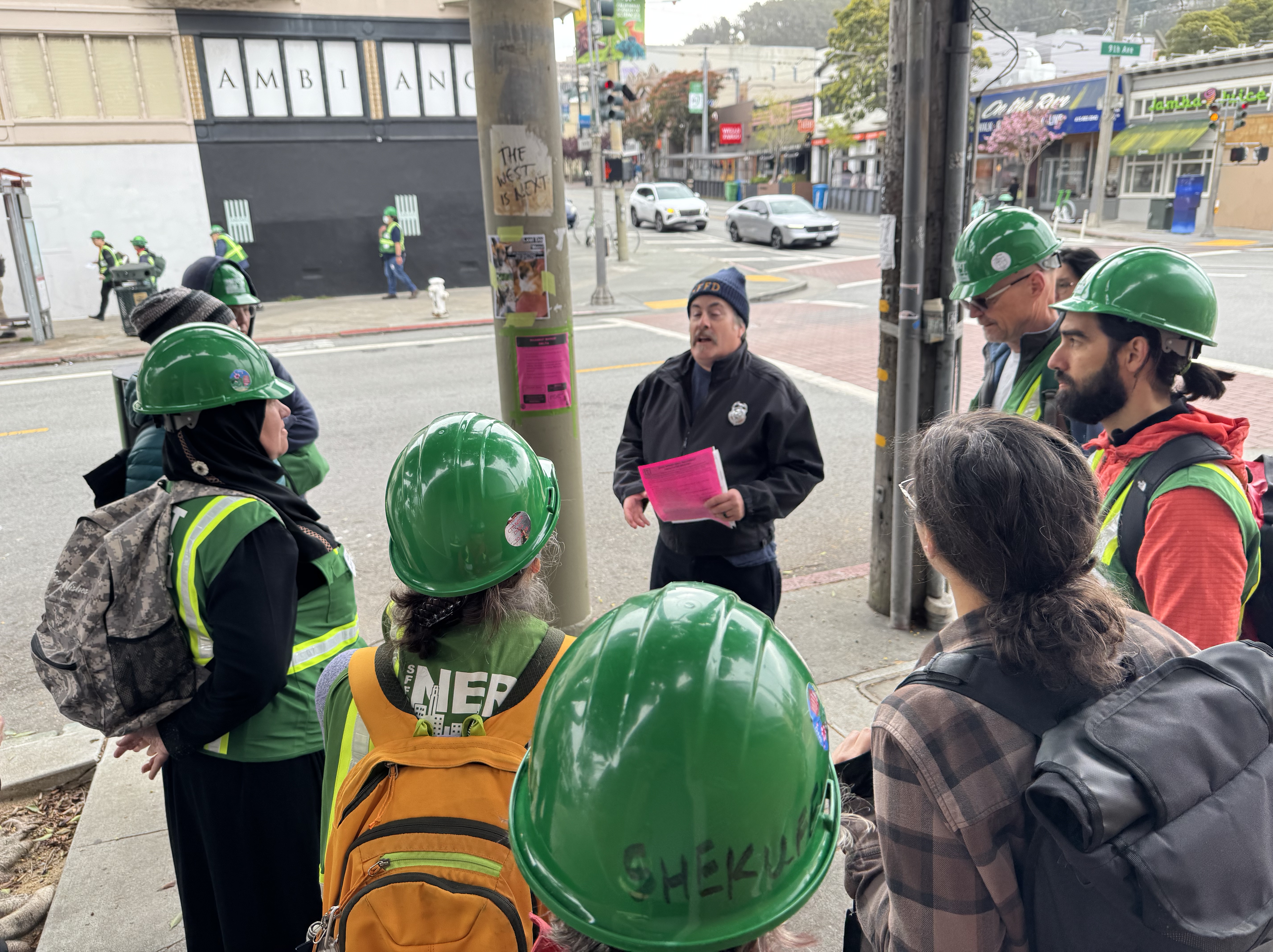
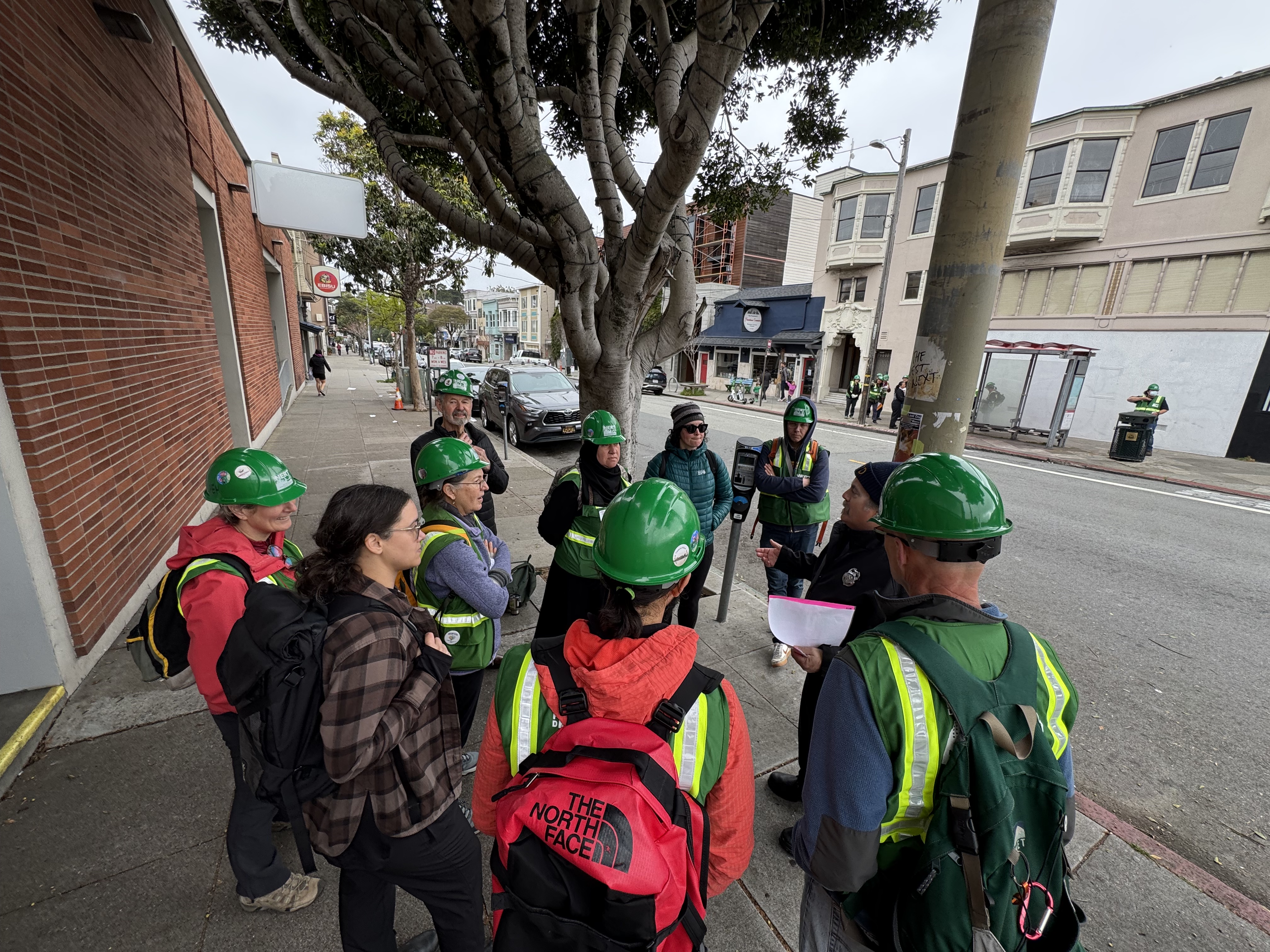
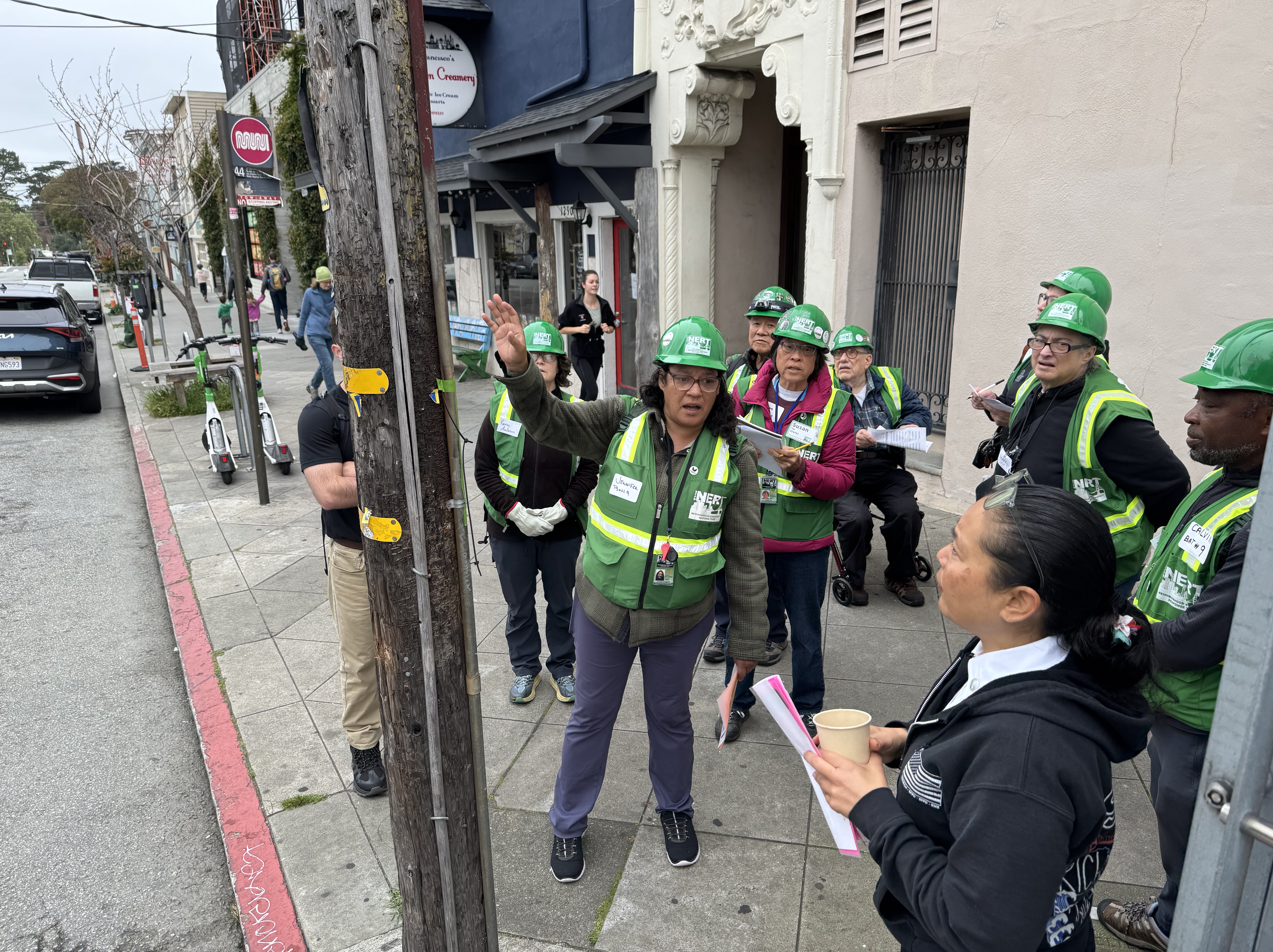
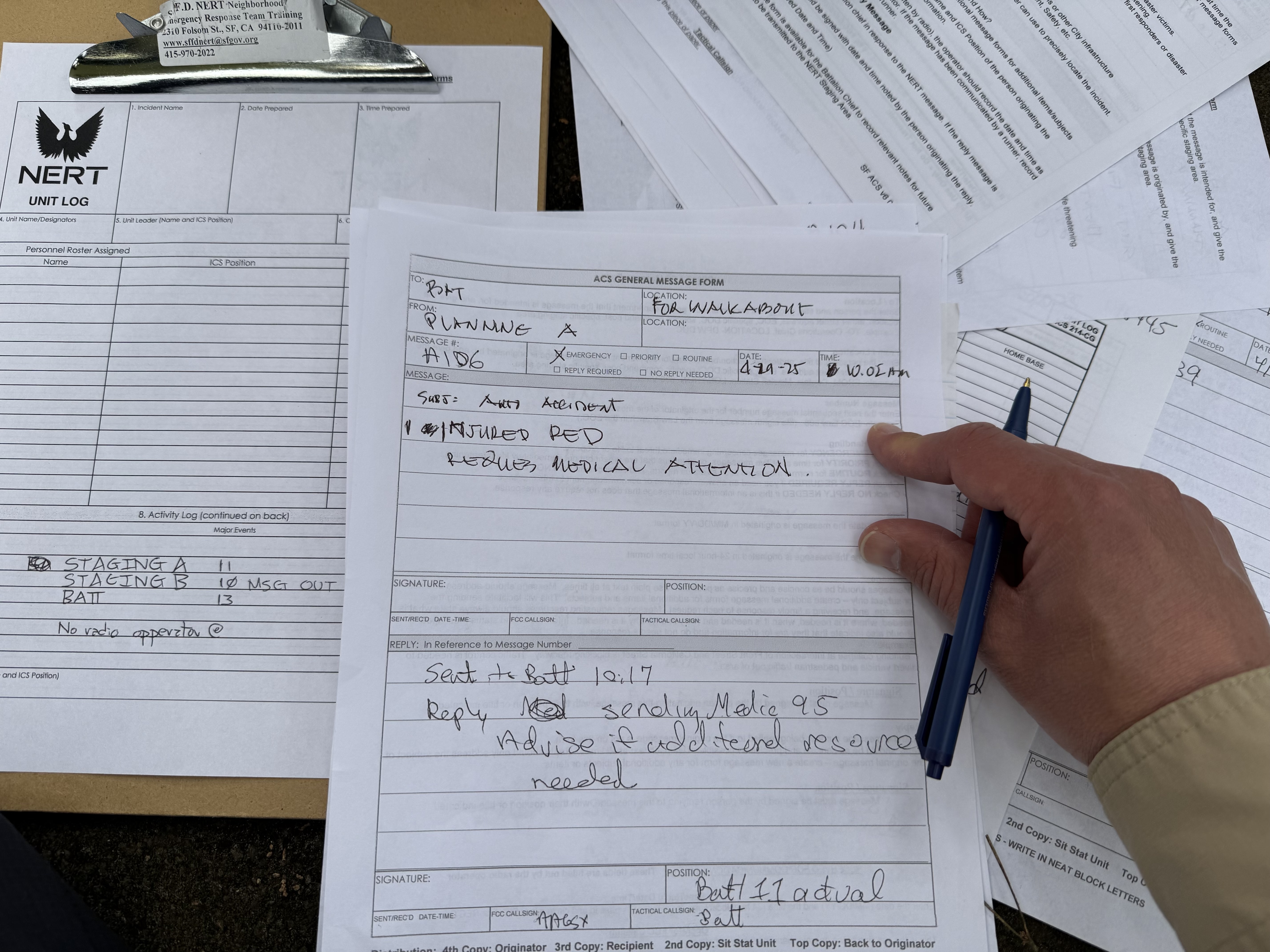
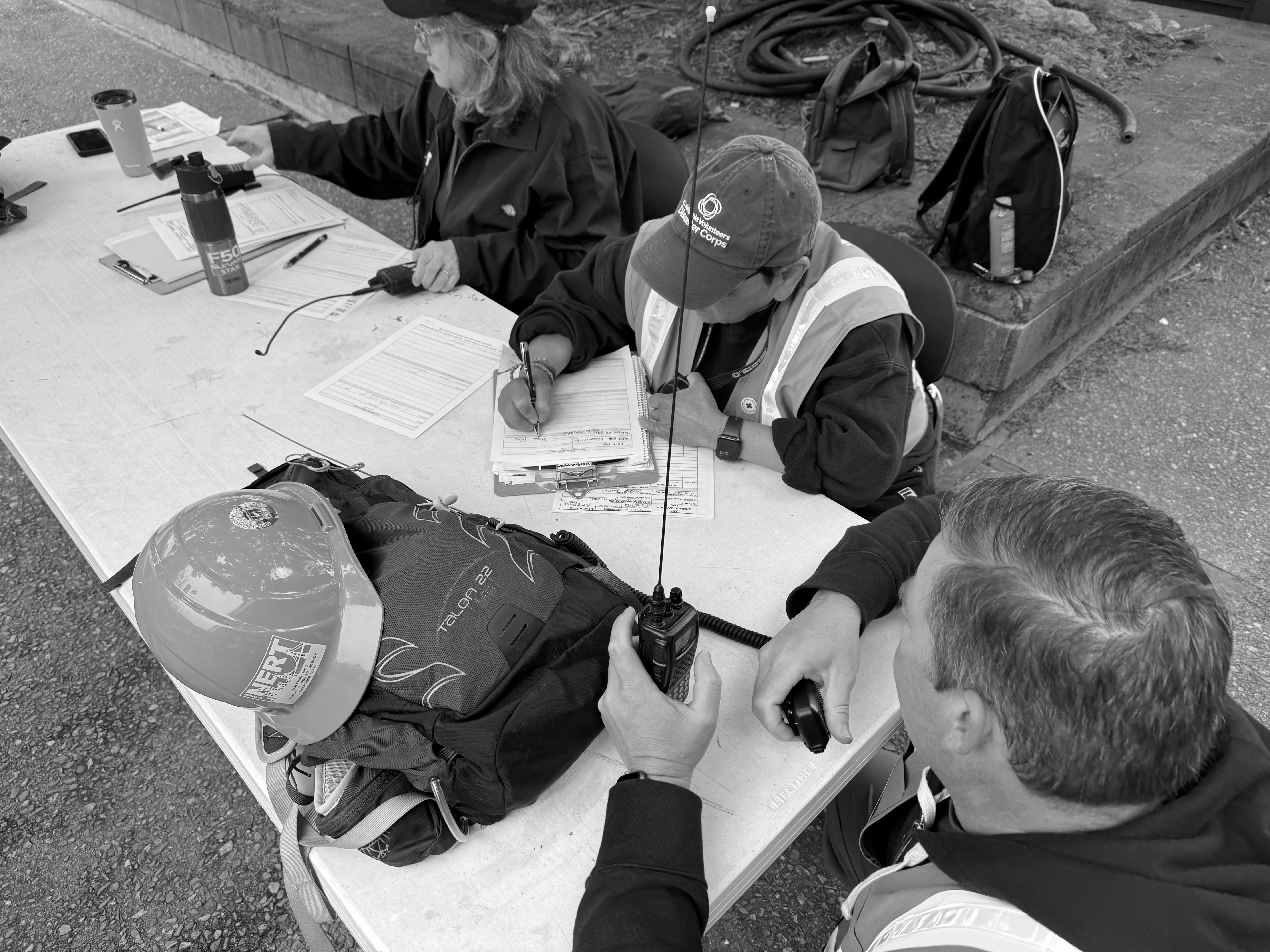
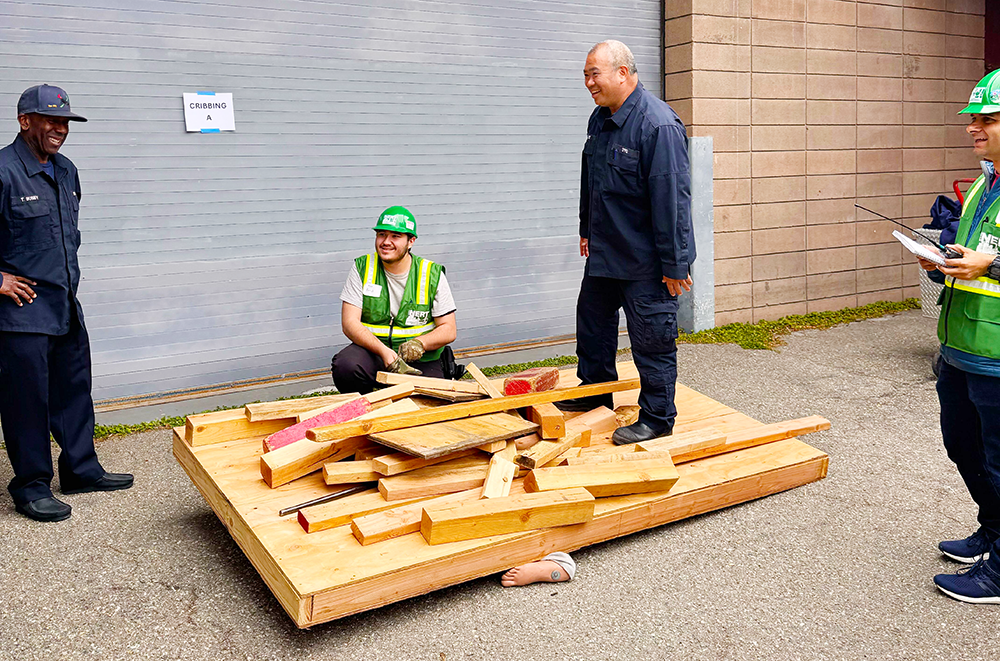
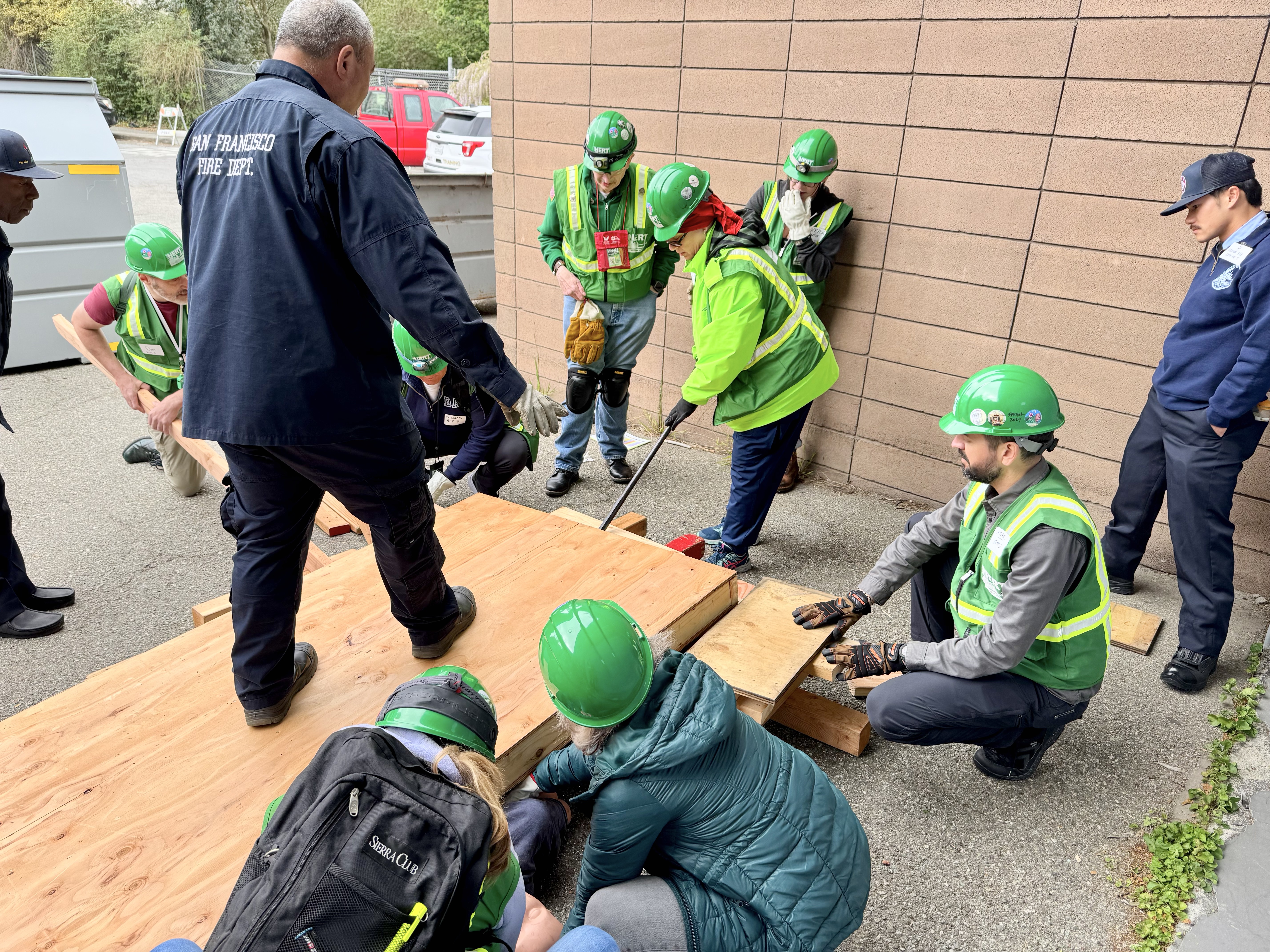
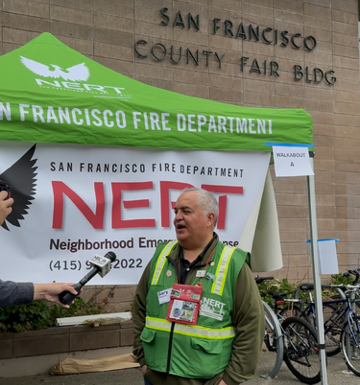
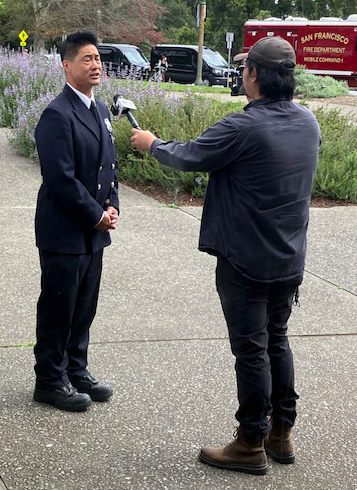
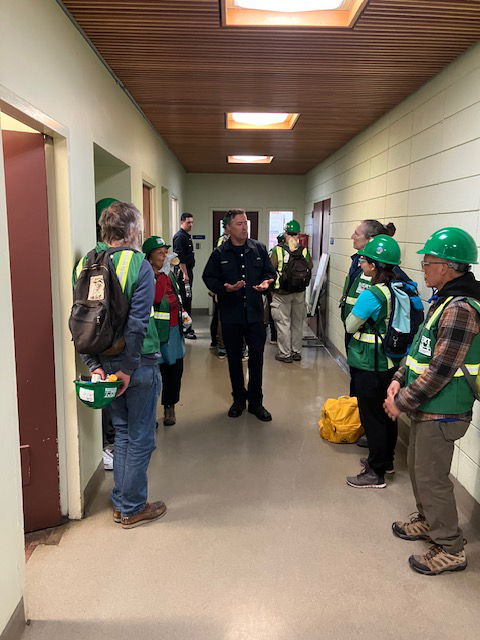
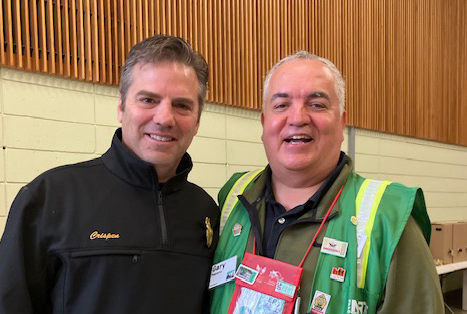
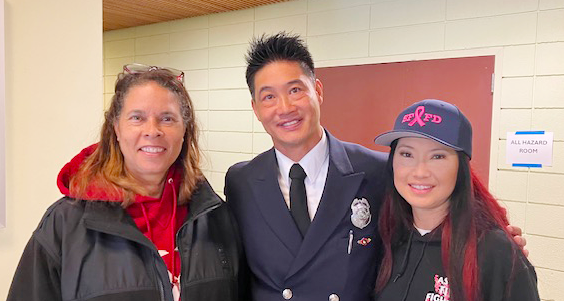
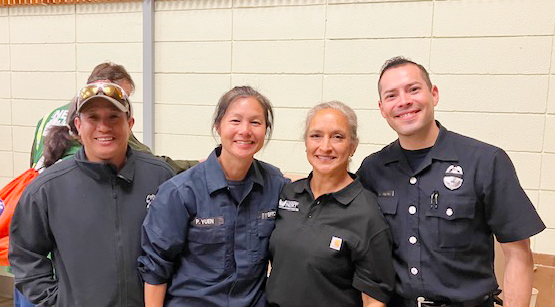
Images courtesy: Andreas Acosta, DavidPerry.com; Gary Pegueros; & Disaster Dispatch staff
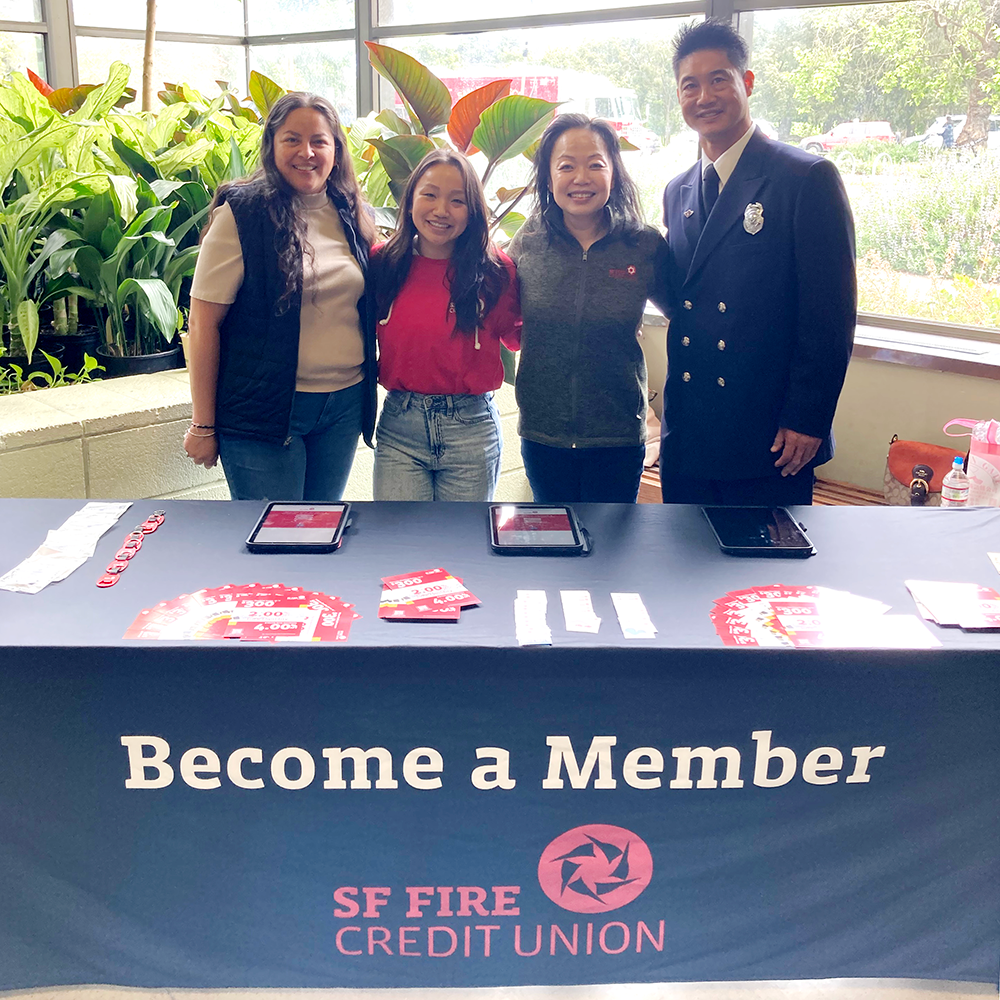
Thank you, SF Fire Credit Union!
Thank you SF Fire Credit Union for the generous donation of breakfast and lunch for the 2025 Spring NERT Drill.
Learn more about the SF Fire Credit Union here.
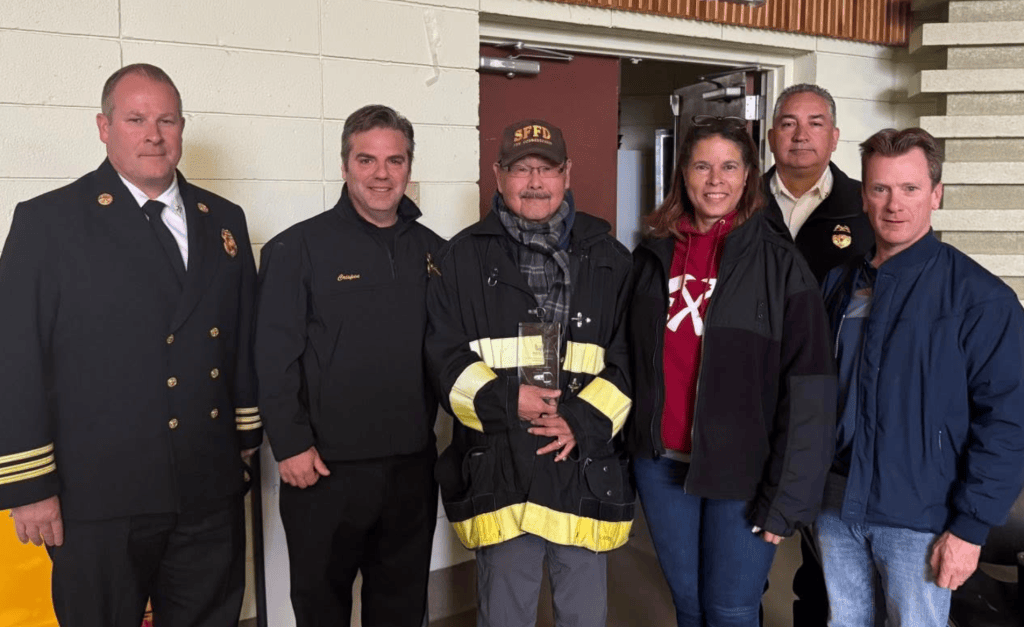
Assistant Deputy Chief Marc Kasper, Chief of Department Dean Crispen, Commissioner Stephen Nakajo, Assistant Deputy Chief Erica Arteseros-Brown, Battalion Chief Luis Ibarra-Rivera, Deputy Chief Patrick Rabbitt.
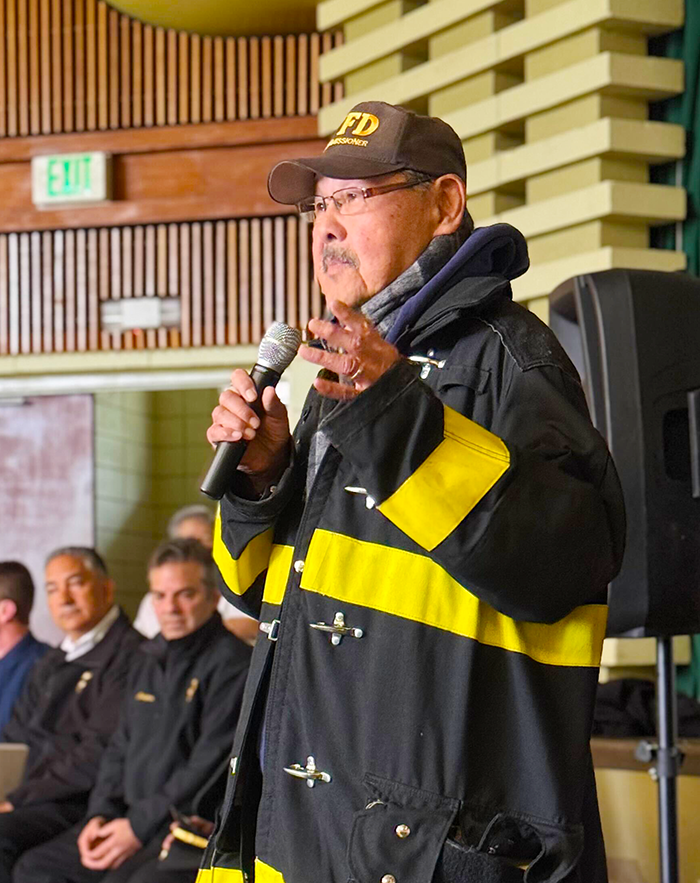
First NERT Community Excellence Award Bestowed on Commissioner Stephen Nakajo
Stephen Nakajo is a long-time community leader and public servant in San Francisco. He was first appointed to the Fire Commission in 1996 by Mayor Willie Brown. Since then, he has served as both President and Vice President of the Commission, and has been reappointed by several mayors, including Gavin Newsom, Edwin M. Lee, and London Breed. His leadership and dedication have made him a respected figure in city government.
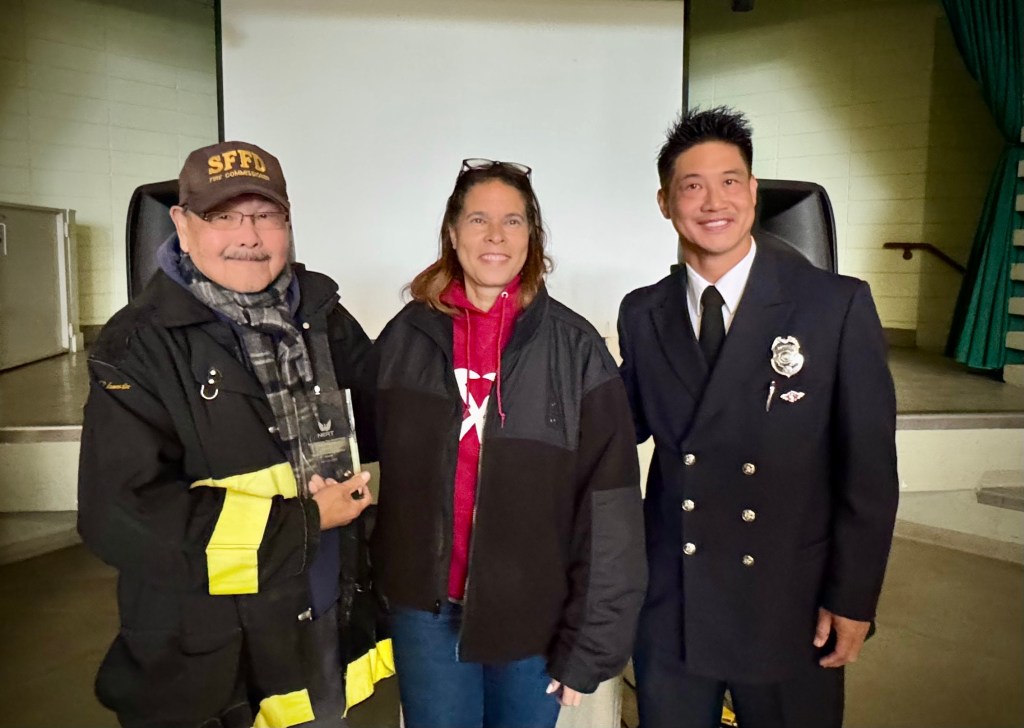
Mr. Nakajo is also a strong supporter of the SFFD Neighborhood Emergency Response Team (NERT). He invited NERT to present to the Fire Commission so others could learn how the program began and how it helps the community during disasters. He has attended more than a dozen NERT drills, where he takes time to meet volunteers and thank them personally. Because of his deep support for NERT and the community, he was honored with the first-ever NERT Community Excellence Award in 2025. Captain Tom, the NERT Program Coordinator, created the award to recognize people who make a big difference. In honor of Mr. Nakajo, the award has now been renamed the Stephen Nakajo NERT Community Excellence Award.
Outside of his work with the Fire Commission, Mr. Nakajo has helped lead many community efforts. He co-founded the Kimochi Senior Center, which supports Japanese American seniors, and the Nihonmachi Street Fair, a celebration of Asian Pacific American culture. He also leads the Japantown Task Force, working to protect and improve one of the last Japantowns in the U.S.
Mr. Nakajo has received many awards for his service, including honors from the Japanese government. He earned his degrees in Social Science and Social Welfare from San Francisco State University and has spent his life helping others.
What will you do to win the Stephen Nakajo NERT Community Excellence Award?

Radio Waves
Limited bandwidth, lots of traffic:
Net Control to the rescue!
Imagine the intersection of Van Ness and Market Street without any traffic lights, with cars, cabs, buses, autonomous vehicles, people on bikes, and pedestrians all trying to cross; what a mess! If we’re lucky, a DPT officer will roll up in their cart, and they will start directing traffic to establish flow and order!
Having licensed radio operators will improve the speed and efficiency of a NERT disaster response. However, with many operators and numerous messages to pass, within limited bandwidth, a message traffic jam could form, as seen Van Ness Ave. example.
Solving the chaos with a NCO!
In the example above, a DPT officer came to the rescue and ended the chaos at the intersection by directing traffic. In radio operations, we use a Net Control Operator (NCO) in the same way to bring order to the shared frequencies. The role and responsibilities of an NCO are:
- The NCO directs who can speak and when, preventing multiple people from talking at once.
- The NCO prioritizes messages based on urgency using the SFFD’s L.I.P. method: #1 Life, #2 Incident Stabilization, and #3 Property Protection.
- The NCO should keep logs of who is online, their locations, assignments, and capabilities, which helps in tracking resources and coordinating efforts effectively.
- The NCO, by example, can positively encourage the other operators to follow FCC rules and radio best practices. They should also use a slow, calming speaking manner to help reduce stress for all radio operators.
- In large-scale incidents, multiple NCOs may be used for different nets. For example, one NCO at a staging area communicates with field teams, while the second NCO manages the net at the battalion level to coordinate messages from multiple staging areas.
Without Net Control, amateur radio communications during a disaster could become disorganized, leading to message collisions, delays, or lost information, which can hinder emergency response efforts. The NCO role is essential to create an efficient, controlled, and effective communication environment for NERT teams and other emergency responders using amateur radio.
Practice Net Control Operator Skills:
| Have a travel net before and/or after each neighborhood meeting. | Host a radio test or skills day in your Battalion. |
| Join other groups on a repeater net. | Attend 2 Meter Critical Mass. |
SKILLS REFRESHER:
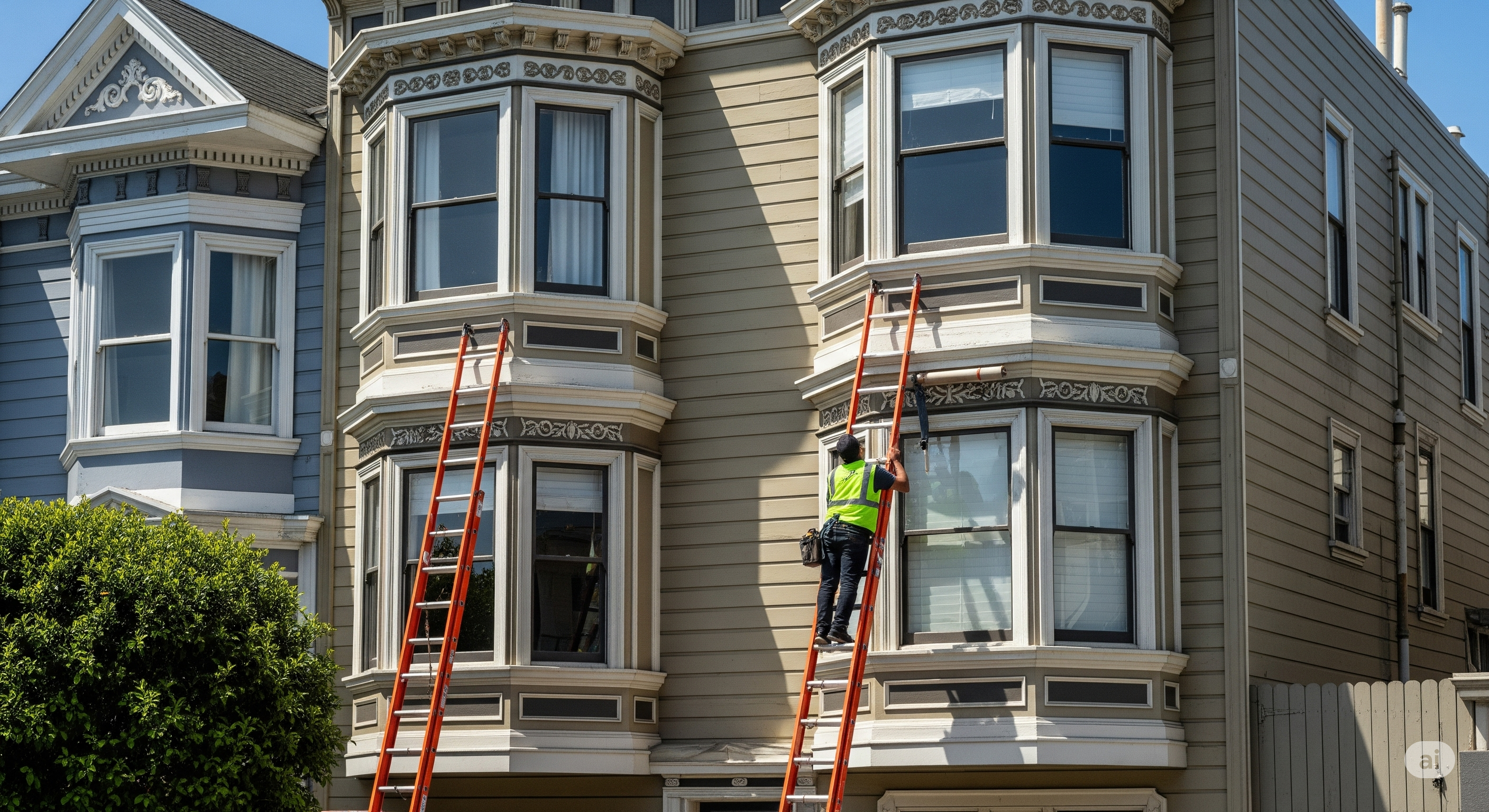
Search and Rescue – Ladders
We think before we climb, so NERTs don’t get hurt!
Ladders are useful tools both at home and for Neighborhood Emergency Response Team (NERT) members during search and rescue activities. They help people reach high places safely when used correctly. However, careless use can cause serious injuries or even death. It’s important to follow some simple safety rules to avoid accidents.
Before using a ladder, choose the right one for the job. Make sure it is tall enough so you don’t have to stand on the top steps, which can be dangerous. Also, check the ladder’s duty rating—the maximum weight it can hold, including you and any tools or gear.
Always inspect the ladder for damage like cracks, loose steps, or bent parts. If you find any problems, don’t use it. Place the ladder on flat, steady ground. For taller ladders, set the base about one foot away from the wall for every four feet of ladder height. Avoid using metal ladders near electrical wires.
When climbing, keep three points of contact with the ladder—two hands and one foot or two feet and one hand—to stay balanced. Don’t lean too far to one side because you might tip over. It’s safer to keep your body centered between the ladder’s sides. Don’t carry heavy tools in your hands while climbing; use a tool belt instead. Never stand on the top step unless the ladder instructions say it’s safe.
Read more about ladder safety in the NERT manual, Chapter Six, Section Nine.
During rescue operations, if possible, have someone hold the ladder steady at the bottom. Also, secure the top of the ladder to prevent it from slipping. Never move a ladder while someone is still on it. Always use a ladder the proper way intended by the manufacturer.
By following these safety tips, you can help prevent accidents and injuries when using ladders, whether you’re working at home or helping others as a CERT member. Stay safe and use ladders with care!
OSHA Quick Reference: https://www.osha.gov/sites/default/files/publications/portable_ladder_qc.pdf
A video from 1977, using stunt performer to demonstrate ladder safety with comedy.
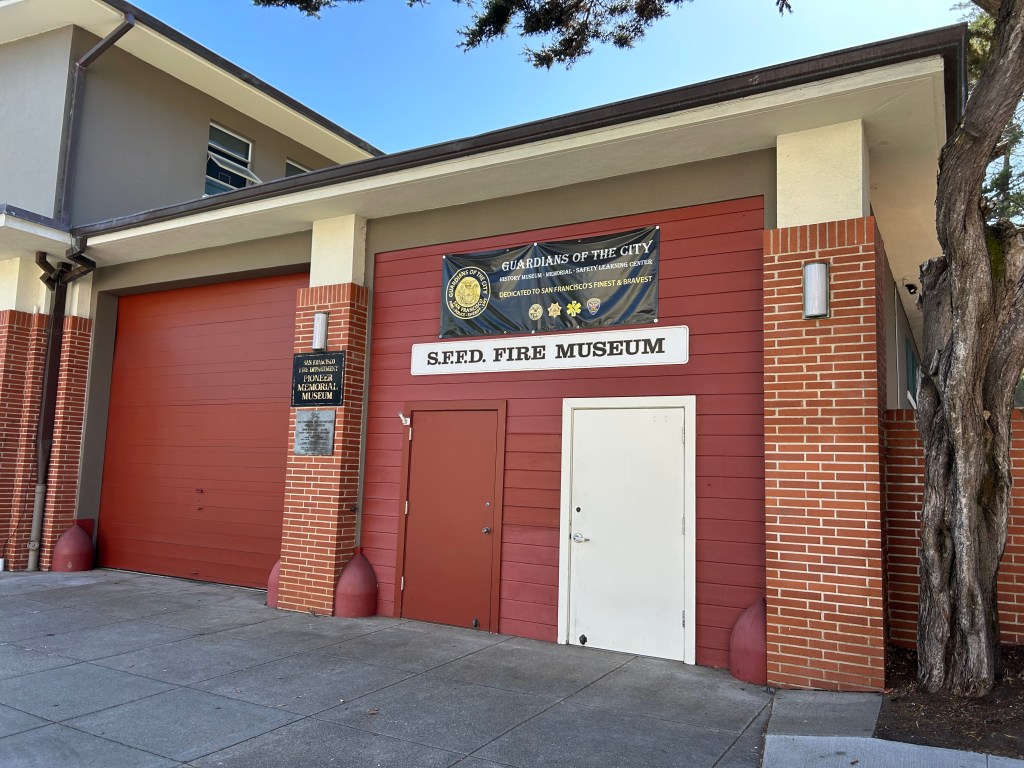
The Guardians of the City Museum & Memorial
Guardians of The City First Responders Museum
welcomes NERT
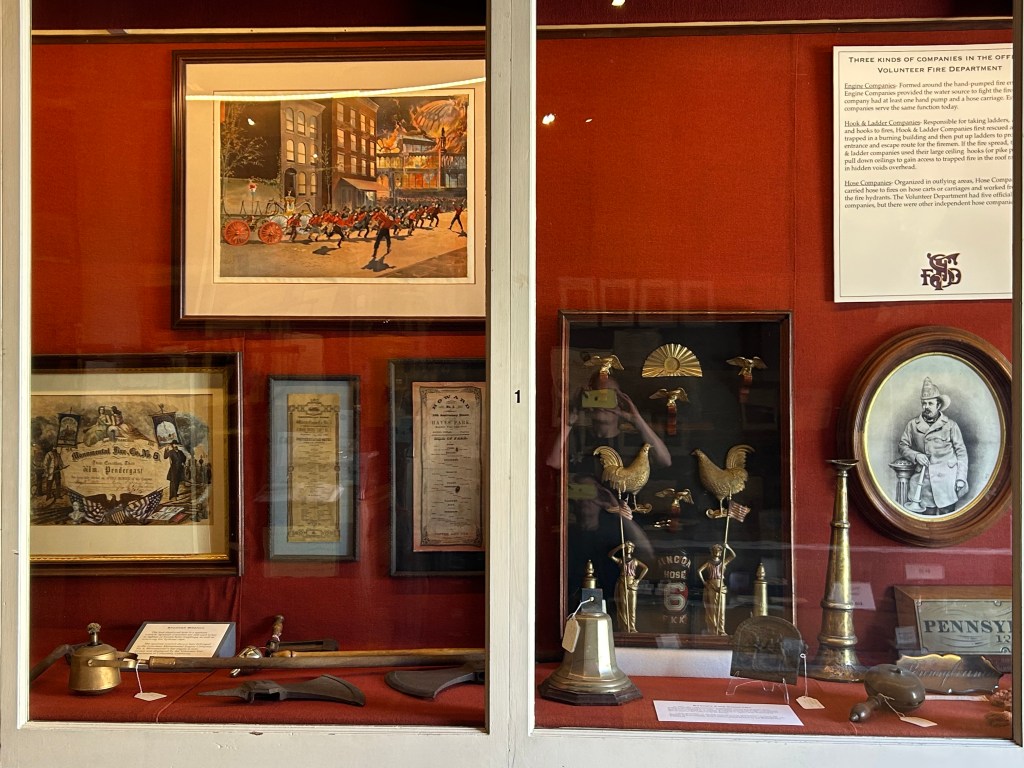
Did you know there’s a cool museum at 655 Presidio Ave., right next to Fire Station 10? It’s a great place for your NERT group to visit! You can see historical SFFD artifacts and learn about the history of the Guardians of The City
This museum is run by a group called Guardians of The City (GOTC). They’re a non-profit, which means they don’t make money for themselves. Their goal is to keep the stories of San Francisco’s first responders alive. That includes the Fire Department, Police Department, Sheriff’s Office, and ambulance crews.
The museum has things from way back in the Gold Rush days, all the way up to the big earthquake in 1989. The history of San Francisco is mixed together with the history of these helpers. They want you to come visit, take a tour, and see how important your role as a NERT member is to our city.
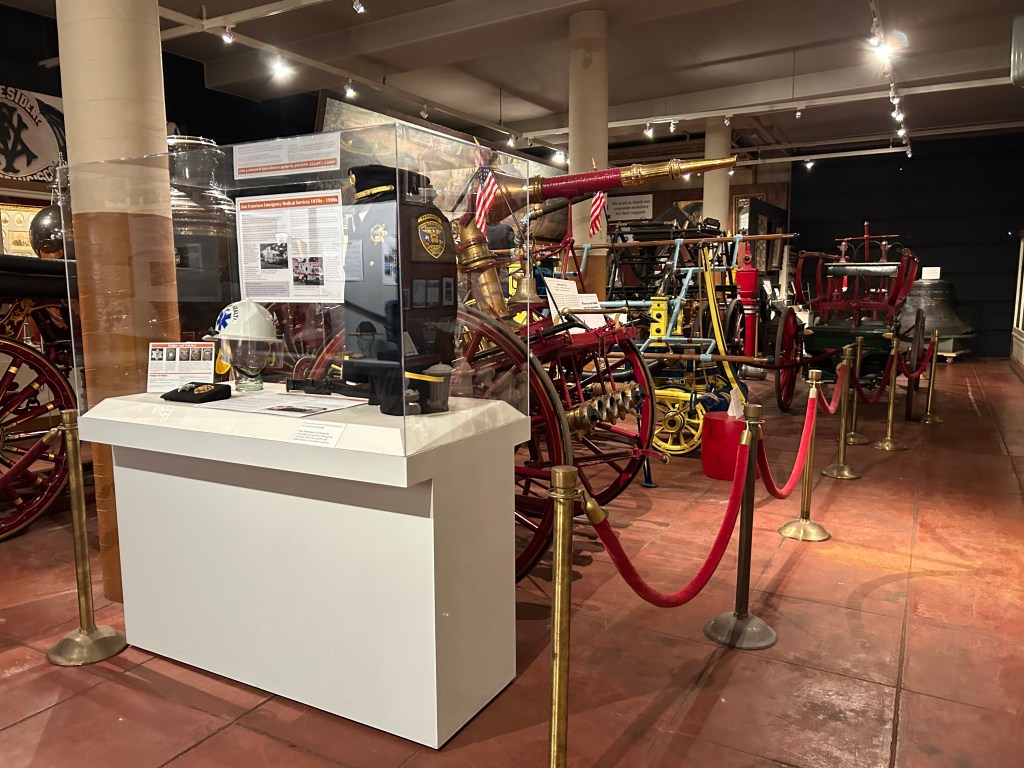
Make sure you check their website for when they’re open. Since the museum is run by volunteers, just like NERT, their hours change from month to month. You can find the latest hours on their website: www.guardiansofthecity.org. They also post about upcoming events on Facebook @GOTCSF and Instagram @gotcsfmuseum.
If you want more info or want to set up a group tour, you can email Jamie O’Keefe, the museum’s curator (and a fellow NERT!), at jamie.okeefe at gotcsf.com
They need your help
The GOTC Museum is run by volunteers, and right now, they don’t have enough people to show visitors around. They’d love to be open Thursday through Sunday, from 1:00 to 4:00 pm, but right now they’re only open sometimes.
If you’re a NERT member and you’d like to help out at the museum, they’d love to hear from you! They have a one-day training where they give you a script to use for tours. You can even add to the script to talk about NERT and how it started after the Loma Prieta earthquake. They have a whole display case about San Francisco’s big earthquakes, and it’s one of the most popular things to see!
Being a docent (that’s someone who gives tours) is fun! People from all over the world come to visit. It’s also a way to learn more about San Francisco’s history from the point of view of the people who keep us safe.
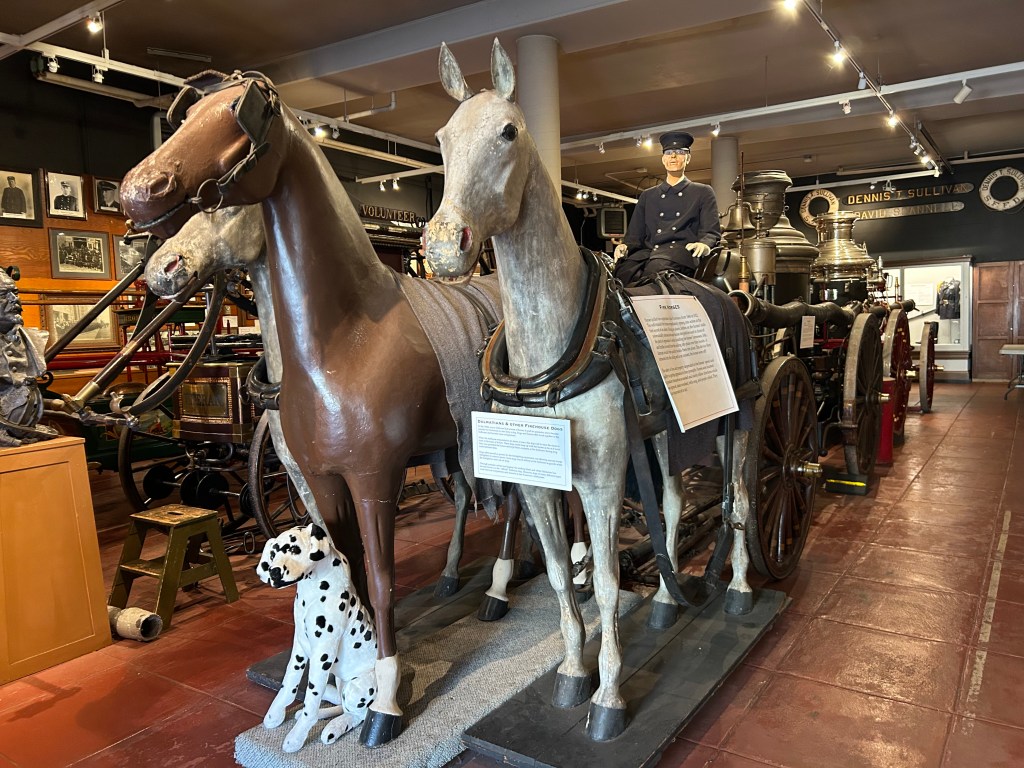
Since volunteering at the museum isn’t a NERT activity, if you volunteer there, you wouldn’t wear your NERT vest or bring your NERT gear. But you can definitely tell visitors about the NERT program.
I wanted to share this with you because I think it would be great for our groups to work together. Museums help build community and teach people things, and that sounds a lot like what NERT does too!
Let me know if you have any questions or want to talk more about this, via e-mail to jamie.okeefe at gotcsf.com
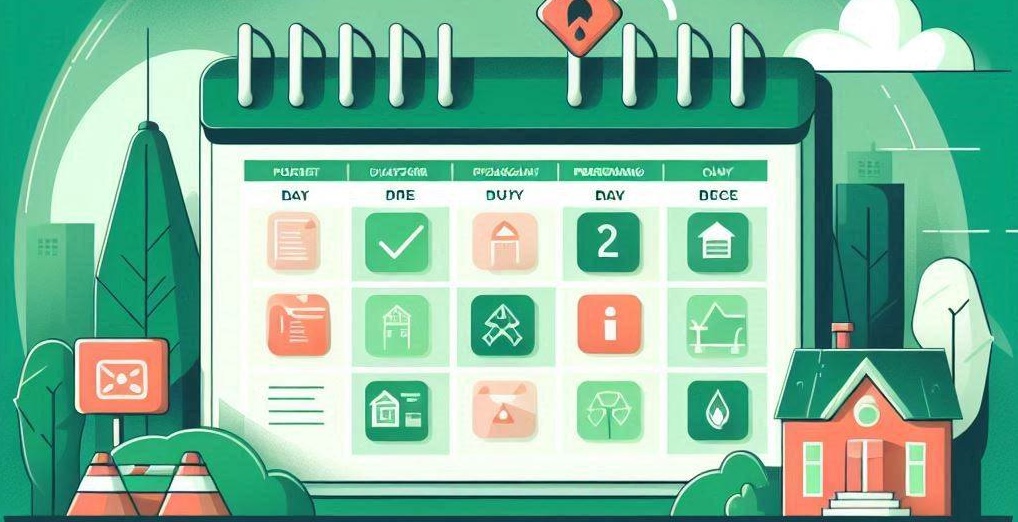
NERT Quarterly Calendar
As we move through the rain and cool weather of the summer season here in San Francisco, lets use this time to level up our skills with in-person and free online training.
We’ve added FEMA self-study classes to this set of calendars. We’ve done so because many organizations, such as NERT, the Auxiliary Communication Service, hospitals, and the IT Disaster Response Team, require their members and employees to take these classes. Grow your skills and become a better-prepared NERT.
As more events are published throughout the quarter, we’ll update this to inform you of those events.
JULY
All-month self-study: FEMA – Introduction to Community Emergency Response Team IS-317 ‡
12: 2 Meter Critical Mass Radio Practice*
19: NERT DAY@DOT – Search and Rescue – Register now via NERT Member App
19: Map Your Neighborhood – Portero Library
AUGUST
All-month self-study: FEMA – An Introduction to the National Incident Management System IS-700 ‡
16: NERT DAY@DOT – Double Header – NERT Activity + 2 Meter Critical Mass – Register now via NERT Member App; Radio operators, please complete this form.
SEPTEMBER
All-month self-study: FEMA – Basic Incident Command System for Initial Response ICS-200 ‡
13: 2 Meter Critical Mass Radio Practice*
20: NERT DAY@DOT – Watch for details in an e-mail
23: ‼️📣 NERT Full Training (TUE PM) Tell your friends and neighbors! 📣
OCTOBER
All-month self-study: FEMA – National Response Framework, An Introduction ICS-800 ‡
11: 2 Meter Critical Mass Radio Practice*
18: Citywide Drill – Watch for details in an e-mail
‡ This class is not instructed by NERT; rather, it is an online-only curriculum provided by FEMA. Upon completing the class, you will receive a digital certificate of completion from FEMA.
* Please note that some events are unaffiliated with the NERT Program. The NERT program is not responsible for its content.
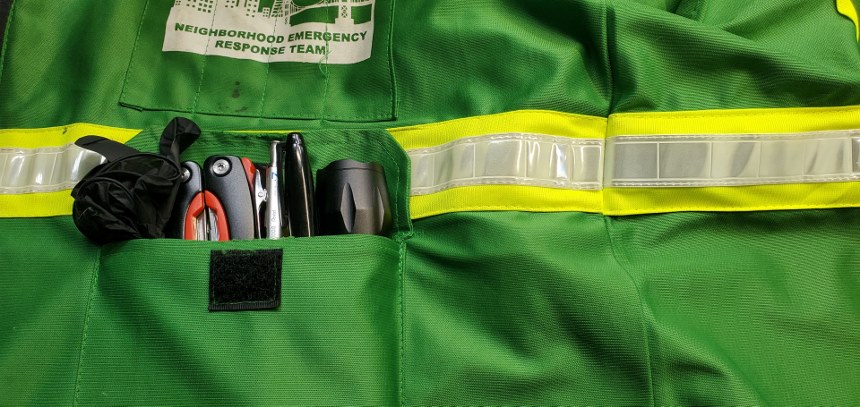
Vest Fodder
New San Francisco Ordinance –
San Francisco has seen a dramatic increase in fires caused by lithium-ion batteries in recent years. These fires can be particularly devastating due to the chemical hazards that make up the batteries, their tendency to flashover and grow quickly in size, and the difficulty of extinguishing them. Learn more about the ordinance and make your house safer here.
MyShake
If you have not yet, please install the MyShake app on your smartphone to help get timely earthquake early warnings.
Apple/iOS: https://apps.apple.com/us/app/myshake/id1467058529
Android: https://play.google.com/store/apps/details?id=edu.berkeley.bsl.myshake
NERT Slack Channel
Besides our newsletter, the NERT Slack Channel is another way to stay in touch. sffdnert.slack.com While not a replacement for Regroup, it does offer messaging and communications for NERT members. To subscribe on Slack, drop an email to: sffdnertnewsletter at gmail.com, and we’ll send you a link. Please use a real name, no nicknames or handles.

Have a Story Idea?
Let Us Know!
If you have an idea for an article or story for our newsletter, please pass it on to sffdnertnewsletter AT gmail.com.
We welcome your ideas and want this to be an inclusive and encompassing newsletter.
Let us know how we’re doing, please complete this survey!
The Disaster Dispatch is usually published quarterly in January, April, July, and October.
Credits
AI has assisted in various parts of story creation and editing. The reader assumes all liability for their actions.
AI-generated images by Google Gemini.
Trouble Viewing This?
Certain email tools may not render this page correctly. Try opening the document in a different browser.
The Disaster Dispatch is a publication of the SFFD NERT Program. All Rights Reserved.