
Happy New Year! Now’s the perfect time to refresh your emergency supplies, restock essentials, and update your plans. Stay ahead of the season by getting prepared!
Dive into the stories we’ve packed into this issue—there’s plenty to keep you informed and inspired.
In this issue:
- Winter Preparedness
- Meet Angie and Norm
- Radio Corner: Working In Hilly Areas
- Training Review: Building Markings
- NERT Quarterly Calendar
- Vest Fodder
Published on January 1st, 2025.
Comments? Drop us a line anytime: sffdnertnewsletter at gmail.com
#Winter Ready
Be Ready for a San Francisco Winter
Tips for Home and Community Preparedness
San Francisco winters may not bring heavy snow or extreme cold, but they present unique challenges like heavy rains, high winds, and occasional flooding. A proactive approach to preparedness is key to ensuring you, your home, and your community are ready to face winter’s challenges. Here’s how to make yourself and your home more resilient while contributing to neighborhood safety during emergencies.
Preparing Your Home for Winter
Your home is your first defense against winter weather, so safeguard it from hazards. Here are some essential measures you can take:
- Seal Your Home Against the Cold and Damp
- Inspect your windows and doors for drafts. Use weather stripping or caulk to seal gaps and keep warmth inside.
- Check your roof for loose shingles or leaks, and clean out gutters to prevent water damage from clogged drains during heavy rains.
- Stock Up on Essential Supplies
- Ensure you have enough non-perishable food and drinking water to last at least three days (or more) in case of power outages or supply chain disruptions.
- Keep flashlights, batteries, and portable chargers readily available for emergencies.
- Prepare for Power Outages
- Invest in battery-operated or solar-powered lights and consider a portable generator if you rely on medical devices or other critical equipment.
- Have extra blankets, warm clothing, and sleeping bags on hand to stay warm without heating.
- Flood Preparedness
- Know if your home is flood-prone, and keep sandbags or water-absorbent barriers ready to block potential water entry points.
- Store important documents and valuables in waterproof containers.
- Fire and Carbon Monoxide Safety
- Have your chimney inspected and cleaned if you use a fireplace. Avoid heating your home with stoves or grills, as they pose carbon monoxide risks.
- Install and test smoke and carbon monoxide detectors.
Personal Winter Readiness
Beyond preparing your home, you should also ensure you’re personally equipped to handle the challenges of a winter emergency:
- Create a Winter-Ready Go-Bag
- Pack an emergency kit with essentials such as a flashlight, spare batteries, first aid supplies, and portable phone chargers.
- Include winter-specific items like thermal clothing, waterproof boots, gloves, and a rain poncho.
- Stay Informed
- Monitor weather forecasts and sign up for local emergency alerts through services like AlertSF to receive timely updates.
- Familiarize yourself with evacuation routes and the locations of shelters in your area.
- Support Vulnerable Neighbors
- Check on elderly or disabled neighbors to ensure they have adequate supplies and know how to get help during emergencies.
- Consider pooling resources with neighbors, such as generators or tools, to strengthen community resilience.
Community Preparedness: Responding to Winter Disasters
In addition to preparing your home and yourself, be ready to respond in your neighborhood if disaster strikes. San Francisco’s winter emergencies could require a coordinated response, and, if called upon as a member of NERT, you can play a vital role.
- Prepare for Deployment
- Assemble a winter-specific deployment kit with essentials like thermal layers, waterproof gear, and insulated water bottles.
- Be mindful of personal safety during deployment, avoiding hypothermia, and staying hydrated.
- If Requested By The SFFD
- Winter disasters in San Francisco often involve flooding, power outages, and road hazards. Equip yourself to handle these issues:
- Assist with setting up warming stations or distributing supplies.
- Participate in the Adopt a Drain Program.
- Conduct wellness checks in your neighborhood, especially for at-risk individuals.
- Winter disasters in San Francisco often involve flooding, power outages, and road hazards. Equip yourself to handle these issues:
- Use Simple Communication Tools
- Use amateur radios or other low-tech communication methods if power outages disrupt cell service.
- Maintain clear and concise communication within your team and relay information to Incident Command.
- Coordinate as a Team
- Work within the Incident Command System (ICS) to ensure efficient and organized responses.
- Stay flexible and adapt to weather conditions, road closures, or other unforeseen challenges.
Key Takeaways for a Safer Winter
Winter in San Francisco may not bring blizzards, but its wet, windy conditions and potential for flooding demand serious preparation. By taking simple steps to winterize your home, assembling personal and deployment kits, and working collaboratively with your community, you can stay safe and resilient in the face of whatever winter brings.
Preparedness is a community effort. Share these tips with your family, friends, and neighbors to ensure everyone is ready. Together, we can weather the winter with confidence and security.
For more resources, visit San Francisco’s emergency preparedness website or connect with your local NERT team. Let’s make this winter a safe one for everyone!
https://bit.ly/EmergencyPocketGuide
Meet Angie Romero & Norm Caba

Radio Waves
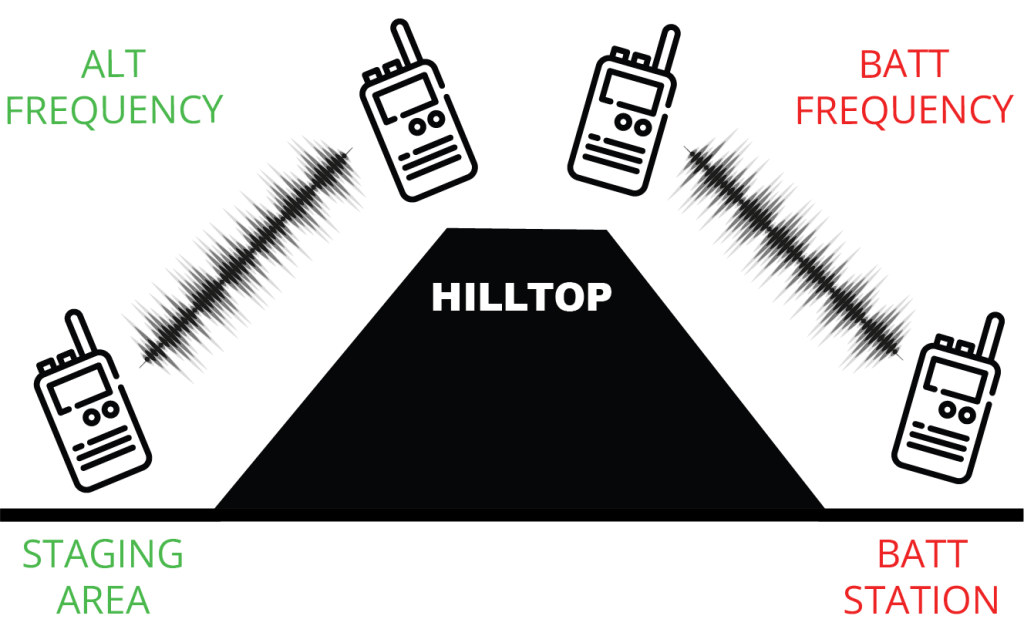
What do you do if you have a hill between your staging area and your battalion station?
Rolling hills make for scenic views across The City; these same hills, even small ones, can block the radio waves due to a concept called line-of-sight propagation. This means that radio waves, especially those in the VHF and UHF bands, travel in straight lines and require a clear path between the transmitting and receiving antennas.

In FIGURE 1, the light waves from the flashlight get blocked by the round object, making a shadow. Similarly, radio waves travel a straight path, and hills and buildings can block these waves, just like the round object in the figure.
Techniques to overcome the challenge:
- Use Runners: Sent two NERTs on foot, on bikes, or in a car to physically deliver the message to the battalion station.
- Higher Antenna: Raise your antenna higher can help the signal pass over the hill.
- Higher Antenna: Raise your antenna higher can help the signal pass over the hill.
- Different Frequency: Lower frequency bands, like HF, can sometimes propagate over longer distances and around obstacles due to atmospheric conditions.
- Repeaters: Use a radio repeater located on a higher point, it can relay your signal to the other side of the hill.
- Use a Human Repeater: Place a radio operator at the top of the hill with two radios. (See details below.)
The human repeater:
How do you implement a human repeater?
- Send two NERTs to a safe, high point between your staging area and your battalion station. (Remember, NERTs always work in pairs.)
- The radio operators at the top of the hill will receive the message from the staging area (just as if the staging area was passing directly to the battalion), writing the message down on a message form.
- The radio operators at the top of the hill will then pass the received message to the battalion station.
- Traffic from the battalion will follow backwards through this same configuration.
Things to consider when operating with a human repeater:
- In an ideal situation, you will have a small table and two chairs to work from and two radios.
- Depending on traffic volume or the number of licensed operators, one hilltop operator can be the scribe for the first, OR they can operate simultaneously, receiving and passing messages.
- For the staging area to hilltop frequency, do not use the assigned BATT frequency for your neighborhood. We suggest using a NERT frequency from a distant part of The City to avoid interference.
- If there are a large number of hills or obstructions in your neighborhood, consider moving your primary COMMs team out of the staging area and up to the hilltop.
Map Your Sight Lines:
This handy tool will let you place two points on a map, and it will show you if there are hills in the way, very handy as you explore multiple scenarios in advance. Please note that this tool only plots the earth/hills; it does not include the built space, including buildings, which can also interfere with radio operations.
https://www.scadacore.com/tools/rf-path/rf-line-of-sight/
SKILLS REFRESHER:
Building Markings
FEMA Building Markings: A Vital Tool for Disaster Response
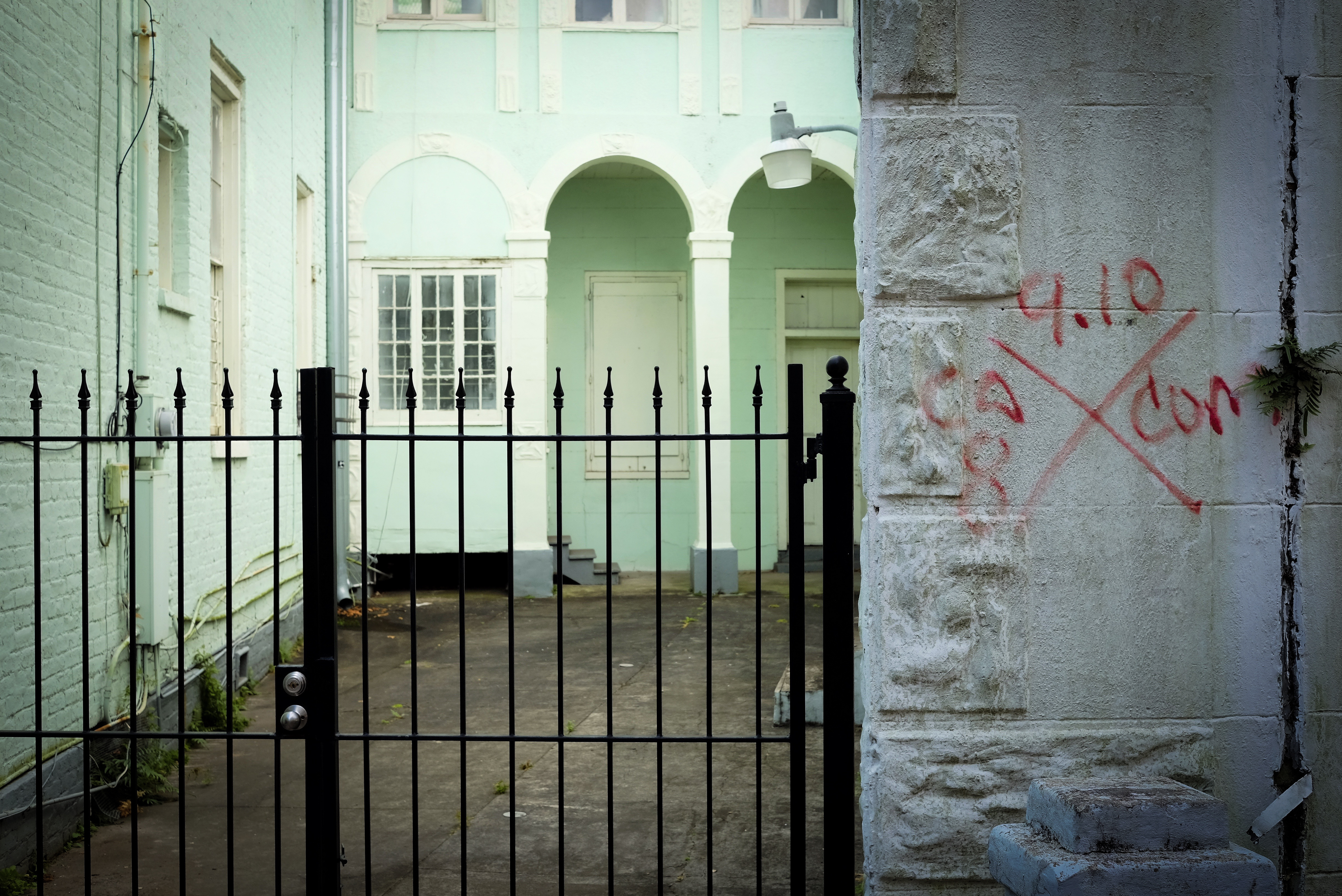
In the chaotic aftermath of a natural disaster like an earthquake or hurricane, swift search and rescue (SAR) operations are paramount. The Federal Emergency Management Agency (FEMA) has developed standardized building markings to coordinate these efforts effectively. These markings provide critical information to emergency responders, enabling faster, more efficient, and safer rescue operations.
The FEMA Marking System
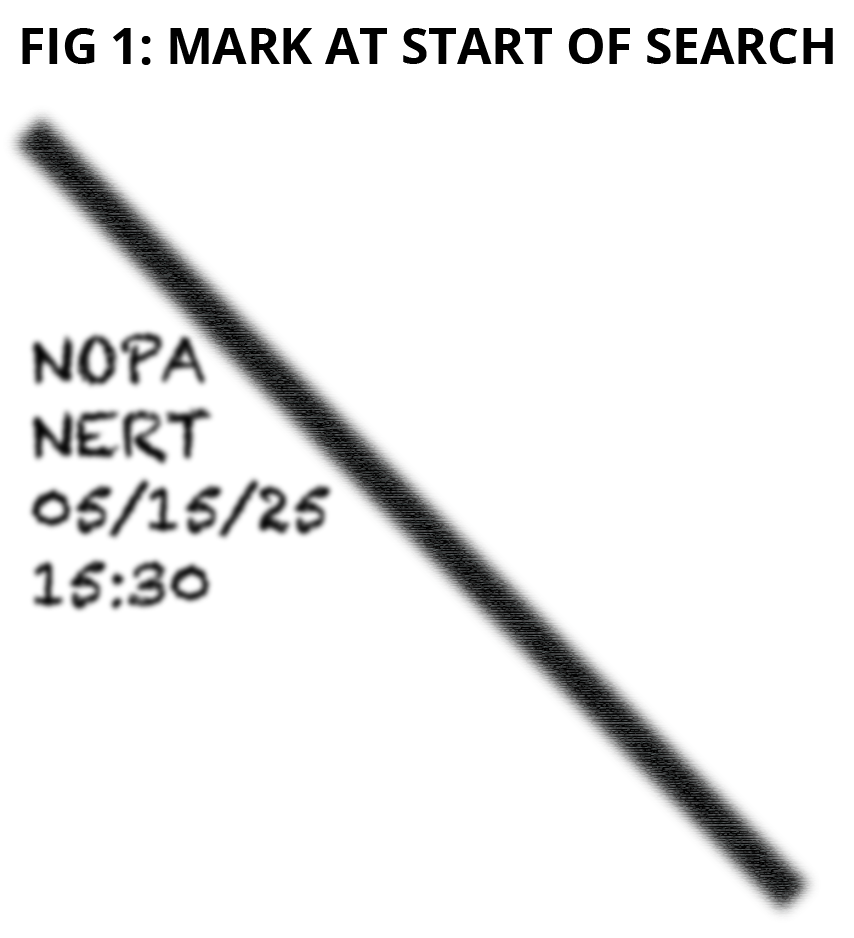
FEMA’s system employs a simple yet effective approach. A large “X” is painted or chalked on the front of a building, signifying that it has been searched. Within the “X,” responders include crucial details. First, draw one leg of the “X” from the upper left to the lower right, then add details in the left section (FIG 1).
If you complete the building search, draw the second line of the “X” from the upper right to the lower left. Then, complete the remaining three sections (FIG 2).

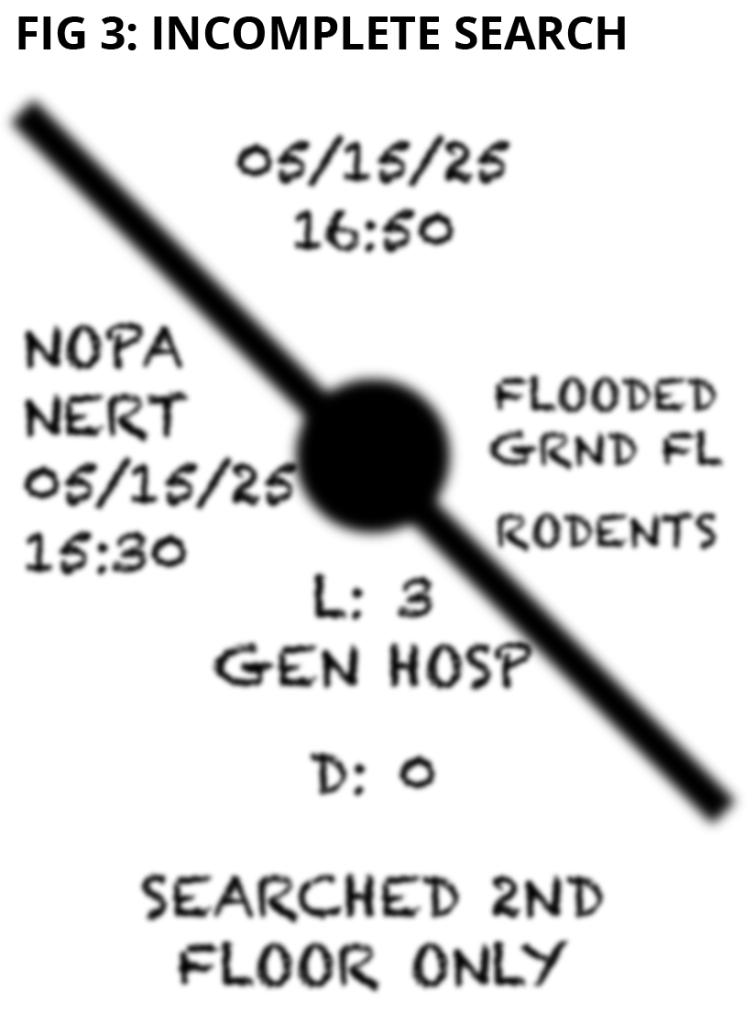
If the team cannot complete the search, draw a solid circle in the center of the first line of the X, then add details as appropriate, including a note of what was searched (FIG 3).
Section details
- Left quadrant: Date and time of entry and team name.
- Top quadrant: Date and time of exit.
- Right quadrant: Hazards (flooding, rats, etc.).
- Bottom quadrant: Casualty information, number of casualties/survivors
This standardized system ensures clarity and consistency across all responding agencies, from local fire departments to federal teams.
Benefits of the Marking System
The primary benefits of this system are:
- Prioritization: Directs resources to areas with the highest need.
- Efficiency: Prevents redundant searches, saving valuable time.
- Safety: Reduces the risk of responders entering dangerous or unstable buildings.
- Coordination: Facilitates seamless collaboration between different agencies.
By providing a clear and concise method for communicating critical information, FEMA’s building marking system plays a vital role in saving lives and improving the overall effectiveness of disaster response efforts.
Transitioning to Stickers: Enhancing Safety and Efficiency
Recognizing the need for further improvements, FEMA has transitioned from spray paint to stickers for building markings. This shift offers several key advantages:
- Reduces stigma experienced by survivors with spray paint markings being semi-permanent.
- Environmental benefits: More environmentally friendly than spray paint, reducing the ecological impact of disaster response.
- Improved readability: Writing details with a pen is easier than with a spray can.
- Increased Efficiency: Stickers are faster to apply, allowing responders to move more quickly through affected areas.
- Standardization: Provides a consistent and easily readable format for all markings, some of which include notes to facilitate correct use.
Follow this link to download a PDF with two stickers per page, which you can print out now and add to your NERT response bag or neighborhood cache.
Conclusion
Using a standardized marking system used by local responders to nationally deployed teams helps prioritize responses, adds efficiency, increases safety, and facilitates response coordination. The transition to stickers represents a significant advancement in disaster response technology. By prioritizing safety, efficiency, and environmental sustainability, FEMA continues to refine its approach to disaster relief, ensuring that communities receive the most effective and responsible assistance during times of crisis.
Citation on search marking: NERT Field Guide, page 45
NERT Quarterly Calendar
As we move through the rain and cool weather of the winter season here in San Francisco, lets use this time to level up our skills with in-person and free online training.
We’ve added FEMA self-study classes to this set of calendars. We’ve done so because many organizations, such as NERT, the Auxiliary Communication Service, hospitals, and the IT Disaster Response Team, require their members and employees to take these classes. Grow your skills and become a better-prepared NERT.
As more events are published throughout the quarter, we’ll update this to inform you of those events.
JANUARY
All-month self-study: FEMA – Introduction to the Incident Command System IS-100 ‡
4: ‼️📣 NERT Full Training (3x Saturday Classes) Tell your friends and neighbors! 📣
11: 2 Meter Critical Mass Radio Practice*
7: ‼️📣 NERT Full Training (TUE AM) Tell your friends and neighbors! 📣
8: ‼️📣 NERT Full Training (WED Eve.) Tell your friends and neighbors! 📣
18: NERT DAY@DOT – Hamcram Earn your FCC radio license via this one-day cram session.
FEBRUARY
All-month self-study: FEMA – An Introduction to the National Incident Management System IS-700 ‡
8: 2 Meter Critical Mass Radio Practice*
15: NERT DAY@DOT – Watch for details in an e-mail
MARCH
All-month self-study: FEMA – Basic Incident Command System for Initial Response ICS-200 ‡
15: 2 Meter Critical Mass Radio Practice*
15: NERT DAY@DOT – Watch for details in an e-mail
APRIL
All-month self-study: FEMA – National Response Framework, An Introduction ICS-800 ‡
12: 2 Meter Critical Mass Radio Practice*
19: NERT DAY@DOT – April Drill – 🗓️ SAVE THE DATE! Location and registration will be provided in mid-March.
‡ This class is not instructed by NERT; rather, it is an online-only curriculum provided by FEMA. Upon completing the class, you will receive a digital certificate of completion from FEMA.
* Please note that some events are unaffiliated with the NERT Program. The NERT program is not responsible for its content.
Vest Fodder
New San Francisco Ordinance –
San Francisco has seen a dramatic increase in fires caused by lithium-ion batteries in recent years. These fires can be particularly devastating due to the chemical hazards that make up the batteries, their tendency to flashover and grow quickly in size, and the difficulty of extinguishing them. Learn more about the ordinance and make your house safer here.
MyShake
If you have not yet, please install the MyShake app on your smartphone to help get timely earthquake early warnings.
Apple/iOS: https://apps.apple.com/us/app/myshake/id1467058529
Android: https://play.google.com/store/apps/details?id=edu.berkeley.bsl.myshake
Free Covid Tests
U.S. households can once again order four free COVID-19 rapid tests through the federal government. To obtain these tests, visit COVIDTests.gov, which will direct you to the U.S. Postal Service website for ordering.
NERT Slack Channel
Besides our newsletter, the NERT Slack Channel is another way to stay in touch. While not a replacement for Regroup, it does offer messaging and communications for NERT members. To subscribe on Slack, drop an email to: sffdnertnewsletter at gmail.com, and we’ll send you a link. Please use a real name, no nicknames or handles.

Have a Story Idea?
Let Us Know!
If you have an idea for an article or story for our newsletter, please pass it on to sffdnertnewsletter AT gmail.com.
We welcome your ideas and want this to be an inclusive and encompassing newsletter.
Let us know how we’re doing, please complete this survey!
The Disaster Dispatch is usually published quarterly in January, April, July, and October.
Credits
“Hurricane Katrina X-code” by Lars Plougmann is licensed under CC BY-SA 2.0.
http://www.svgrepo.com/svg/228866/walkie-talkie – used under CC0
AI-generated images by Adobe Firefly, Gemini.
Trouble Viewing This?
Certain email tools may not render this page correctly. Try opening the document in a different browser.
The Disaster Dispatch is a publication of the SFFD NERT Program. All Rights Reserved.
 The Disaster Dispatch